News
better business decisions
Posted 4 months ago | 6 minute read
Seven questions every sub-5MW BESS developer should be able to answer before selecting a platform
Guest post by GridBeyond Business Development Director (AU), Mark Netto
Most sub-5MW battery projects do not underperform because the asset was wrong.
They underperform because the platform sitting underneath the asset was never designed for the operational, contractual, and portfolio complexity the project eventually encountered.
Across this series, seven recurring themes emerged:
- forecasting quality matters more than most platforms can demonstrate
- hybrid optimisation is fundamentally different from standalone BESS optimisation
- operational performance is driven by SoC quality, degradation management, and telemetry integrity
- market participation and optimisation are separate functions
- offtake structures place specific demands on the optimiser
- portfolio scaling changes the optimisation problem entirely
- the platform decision made at project one shapes financing, operations, and exit outcomes later
Most developers evaluate platforms based on what the first project needs today.
The better question is whether the platform still works when the portfolio reaches scale.
Over the last seven articles, the same pattern has appeared repeatedly.
The sub-5MW battery market is maturing quickly. Developers are becoming more sophisticated. Lenders and infrastructure investors are asking harder questions. Offtake structures are evolving. Portfolio aggregation is becoming the commercial objective rather than the exception.
But many platform decisions are still being made as though the asset exists in isolation.
That is increasingly where the disconnect sits.
A battery optimisation platform is no longer just an operating tool. It is becoming part of the financing structure, the operational backbone, and eventually the due diligence package presented to buyers and lenders.
Which means the platform question is no longer simply:
Can this asset trade?
It is increasingly:
Can this platform support the portfolio, contracts, and operational complexity this business is trying to build?
Across the series, seven practical questions emerged that developers should be able to answer before selecting a provider.
1. Can the platform actually demonstrate forecasting performance?
Most platforms claim forecasting capability.
Very few show comparative performance data against actual dispatch outcomes across meaningful time periods.
Forecasting quality matters because optimisation decisions are only as good as the signal sitting underneath them. The difference is most visible during volatility events — the intervals that disproportionately drive battery revenue outcomes.
The important distinction is not whether a platform can outperform AEMO P5 pre-dispatch forecasts. Most competent platforms should.
The real question is whether the forecasting engine materially improves realised dispatch outcomes over time.
And whether the provider is willing to show the data publicly.
2. Was the platform built for hybrids — or adapted for them?
Adding a battery to a solar asset does not automatically create a hybrid optimisation platform.
Hybrid assets introduce a different optimisation problem:
- solar and storage need to be co-optimised simultaneously
- DC and AC charging paths need to be modelled differently
- clipping and negative pricing need to be forecast and managed together
- ramp rates and FCAS constraints interact differently than they do in standalone BESS
A platform adapted from standalone battery optimisation may still function.
The question is whether it captures the value available from a genuinely integrated hybrid asset.
3. Does the platform understand the true cost of cycling?
Every dispatch decision has a cost.
That cost changes based on:
- state of health (SoH)
- depth of discharge
- chemistry
- age
- thermal behaviour
A platform that does not integrate degradation-aware marginal cost logic is making dispatch decisions without understanding what the cycle is actually worth.
That affects revenue.
It also affects long-term degradation trajectory — which affects refinancing, asset valuation, and eventual sale outcomes.
The same applies to SoC accuracy, rack imbalance detection, and telemetry integrity.
These are not operational edge cases.
They are part of normal battery operations over multi-year project lives.
4. Is market participation being confused with optimisation?
Being connected to the market does not mean the asset is being optimised.
Retailers, FRMPs, and auto-bidding providers solve for market participation:
- registration
- settlement
- compliance
- bidding infrastructure
Optimisation is a separate layer entirely.
It covers:
- forecasting
- dispatch strategy
- marginal cost calculation
- state of charge management
- contract-aware dispatch decisions
A rules-based rebidding engine is not the same thing as a real-time optimisation platform.
Those distinctions matter more as assets become more financially sophisticated.
5. Can the platform actually execute an offtake structure?
Offtake structures are becoming increasingly common in the sub-5MW market:
- virtual tolls
- firmed PPAs
- revenue floors
- cap contracts
- hybrid merchant structures
But many platforms were never designed to manage them operationally.
A contracts-capable platform needs to:
- maintain contracted and physical asset states simultaneously
- embed nominations as hard constraints inside the optimiser
- manage multiple contracts across multiple assets
- provide auditable settlement visibility for owners and offtakers simultaneously
Without those capabilities, the contract layer becomes manual — which is exactly where operational risk and settlement disputes emerge.
6. Does the platform scale beyond project one?
A platform that works for a single asset may not work for a portfolio.
Portfolio optimisation changes the problem:
- obligations may span multiple assets
- contracts may compete for the same physical capacity
- settlement and reporting become portfolio-level problems
- financing structures become more complex
- due diligence expectations increase materially
Many developers only discover these limitations after the second or third project.
At that point, changing platforms becomes expensive operationally and commercially.
7. What does the portfolio look like to a future buyer?
Most developers are not building portfolios simply to hold them indefinitely.
The portfolio is often the mechanism for recycling capital:
- stabilise assets
- refinance or sell
- redeploy proceeds into new development
That means the platform is eventually part of a due diligence process.
Infrastructure investors and buyers want:
- continuous operational records
- consistent performance reporting
- degradation tracking
- contract compliance visibility
- auditable settlement history
A portfolio built across multiple disconnected systems is materially harder to diligence than one operating on a single integrated platform.
That difference shows up in valuation, transaction friction, and buyer confidence.
The question underneath all of them
Across all seven articles, the same underlying question keeps appearing:
Was the platform selected for the first asset — or for the portfolio the developer is ultimately trying to build?
Those are not the same decision.
And increasingly, the developers who understand that distinction early are the ones building portfolios that scale more cleanly, finance more easily, and exit more effectively.
Closing
If you’re currently evaluating platforms, structuring a first portfolio, or trying to understand how these operational and commercial layers interact in practice, happy to compare notes.
Series note
This concludes the GridBeyond sub-5MW BESS series.
Previous articles covered:
- Six Things Every Sub-5MW BESS Project Needs to Get Right
- Forecasting Performance Matters. Very Few Providers Show the Data.
- Adding a Battery to a Solar Farm Doesn’t Create a Hybrid. Optimising Them Together Does.
- Your Revenue Forecast Assumed the Battery Would Perform. Does Your Platform Make Sure It Does?
- Optimisation and Market Participation Are Not the Same Thing.
- Your Offtake Structure Is Only As Good As the Platform Sitting Underneath It.
- Your First Project Is Not Your Last. Build Accordingly.
Latest energy insights
-
15 October 2026
6 minute read
Following the forecast: the hidden risk in battery optimization | Q&A
Read More -
7 October 2026
4 minute read
Private wires in Ireland: a new route to power for data centres and industry?
Read More -

7 October 2026
7 minute read
What is a distributed energy network, and why are businesses building their operations around one?
Read More -
25 September 2026
3 minute read
The age of electricity: the growing role of electricity in economies and energy systems
Read More -
 Awards
News
Awards
News
17 September 2026
2 minute read
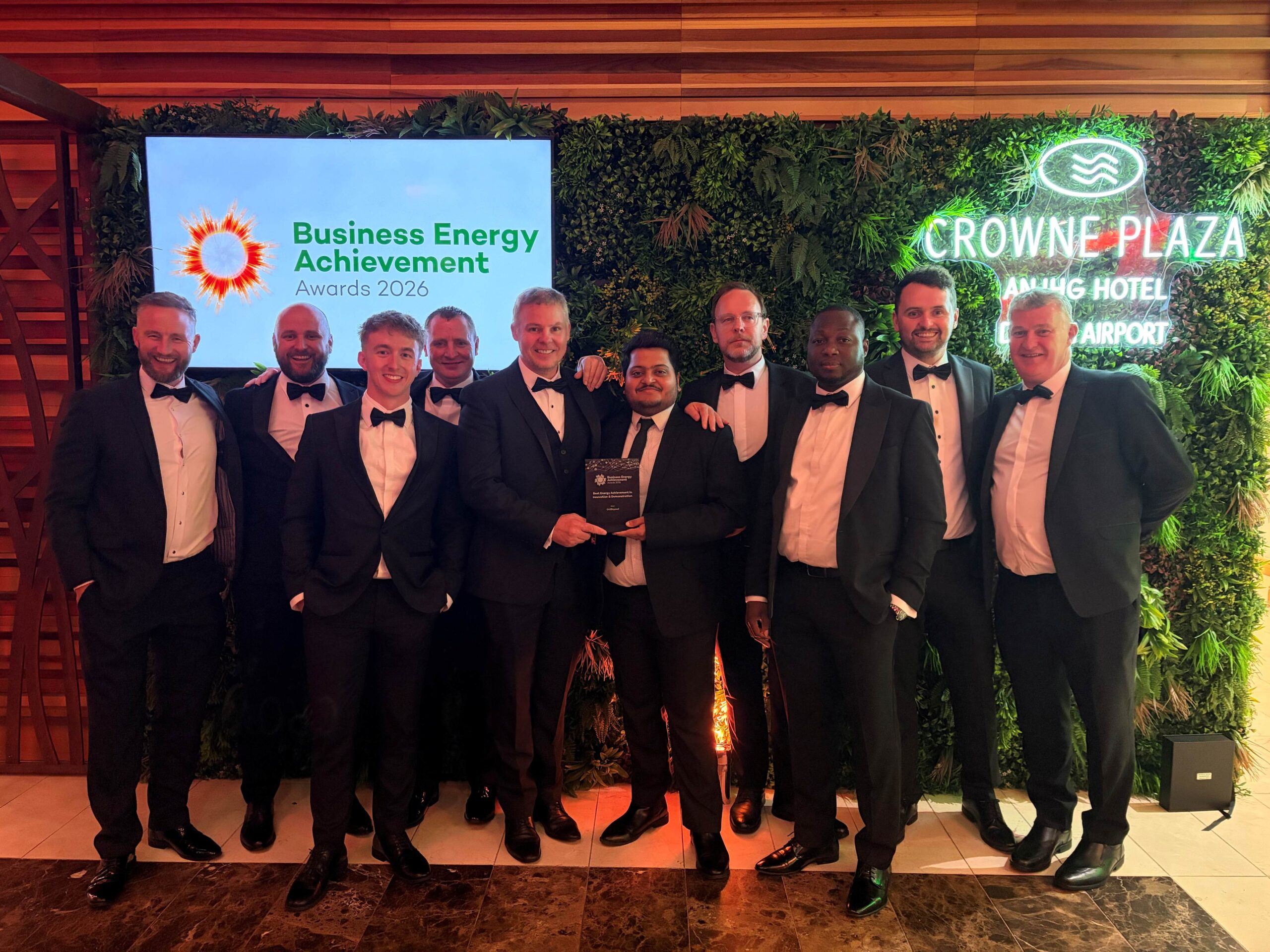
GridBeyond named a Business Energy Achievement Awards winner for innovation in data centre energy flexibility
Read More -

17 September 2026
2 minute read
MPs call for removal of “net zero” from government terminology
Read More