News
better business decisions
Posted 5 months ago | 6 minute read
Your first project is not your last. Build accordingly
Guest post by GridBeyond Business Development Director (AU), Mark Netto
The platform decision made at project one has consequences that don’t become visible until project three, four, or five — by which point they are expensive to undo.
Three things change as a sub-5MW portfolio scales that single-asset infrastructure typically cannot handle:
- the optimisation problem becomes a portfolio problem, not a project problem
- the offtake structures that improve bankability at scale require platform capability that most single-asset arrangements don’t have
- the exit path — selling stabilised assets to recycle capital — depends on the quality and consistency of data the platform has been generating from day one
Most developers don’t think about any of this early enough. The ones that do have a structural advantage by the time it matters.
There is a moment that most sub-5MW portfolio developers recognise, usually somewhere between the second and fourth asset.
The first project was built on whatever infrastructure was available at the time — a market access arrangement that worked, an optimisation platform that did the job, a monitoring setup that seemed adequate.
The asset is operational, generating revenue, performing roughly in line with expectations.
Then the second project connects. Then the third.
And the infrastructure that worked for one asset starts to show its limits. Not dramatically — not in a way that triggers an immediate crisis. Gradually.
In the friction of managing multiple relationships, reconciling data from multiple systems, and explaining performance discrepancies to a lender who is asking harder questions than they did on the first deal.
By the time the problem is fully visible, the portfolio is already built on the wrong foundation.
Rebuilding it is possible. It is also significantly more expensive than building it correctly from the start.
The optimisation problem changes shape
A single battery asset has a relatively clean optimisation objective.
Maximise revenue, manage state of charge, participate in FCAS markets, operate within the physical constraints of the connection point.
The platform solves for one asset at a time.
A portfolio of assets changes the problem entirely.
When multiple assets share a contracted obligation — a virtual toll covering capacity across several sites, for example — the optimiser needs to manage how that obligation is allocated across the portfolio in real time.
Which asset charges, which discharges, which holds capacity in reserve.
Those decisions interact. They cannot be made independently for each site and then reconciled.
A platform built for single-asset dispatch will treat each asset as a separate problem.
That is not portfolio optimisation.
It is running the same algorithm multiple times and hoping the results are compatible.
The gap between those two approaches is not visible at project one. It becomes apparent the moment a contracted obligation spans more than one asset — and at that point, the only remedy is a platform that was designed to manage it.
The offtake threshold
Most serious offtakers — retailers, gentailers, large commercial and industrial buyers — are not looking to contract a single sub-5MW asset.
The minimum we have seen in the market is around 10MW, and that was only because it represented the first tranche of a much larger portfolio already under development.
In practice, offtakers typically want 50MW or more before the commercial conversation becomes serious.
That matters because the offtake structure that makes a portfolio genuinely bankable at scale — a firmed PPA, a virtual toll across multiple assets, a revenue floor underpinning a refinancing — is not available at project one.
It becomes available somewhere between project five and project ten, depending on asset size.
Which means the platform decision made today needs to be made with that endpoint in mind.
A platform that cannot hold multiple contracts across multiple assets simultaneously, that cannot embed nominations as hard constraints across a portfolio, that cannot produce settlement data auditable from both sides of the contract — that platform will become a ceiling at exactly the moment the offtake conversation becomes possible.
By the time that limitation becomes apparent, the portfolio is already built on the wrong foundation.
What a buyer actually looks at
For many developers, portfolio construction is not the end state.
It is the mechanism for recycling capital.
Sell stabilised assets to infrastructure investors or funds. Redeploy the proceeds into new development. Build the portfolio incrementally.
That is a legitimate and well-established model — and it depends entirely on being able to sell cleanly when the time comes.
An acquirer or infrastructure fund buying a portfolio of sub-5MW BESS assets will conduct detailed due diligence on performance history, contract compliance, degradation trajectory, and operational record.
What they want to see is continuous, auditable data across every asset — performance against model, cycling history, state of health (SoH) trajectory, settlement records, contract delivery.
Presented consistently. From a single source.
What creates friction — and affects valuation — is the opposite.
A patchwork of records from multiple platforms, monitoring systems that were replaced mid-portfolio, market access arrangements that changed between projects, performance data that requires manual reconciliation before it can be presented to a third party.
A portfolio built on a single integrated platform, with consistent performance reporting and a clean contract layer from day one, is a materially different asset in a due diligence process than one assembled across multiple vendor relationships over several years.
That difference shows up in valuation. It shows up in the length of the process. And it shows up in buyer confidence — which affects whether the process completes at all.
The question worth asking at project one
The developers who avoid the transition problem are not necessarily more sophisticated than those who encounter it.
They just asked a different question early.
Not:
Does this platform work for this asset?
But:
Does this platform work for the portfolio I intend to build — and does it produce the data I will need to exit it?
Those are not the same question.
And the answer to the first does not guarantee anything about the second.
Closing
If you’re currently structuring a first or second project and thinking about what the portfolio looks like at scale, happy to compare notes on what we’re seeing in the market.
Series note
This is the seventh in a series on what separates high-performing sub-5MW battery portfolios.
Previous articles covered:
- Six Things Every Sub-5MW BESS Project Needs to Get Right
- Forecasting Performance Matters. Very Few Providers Show the Data.
- Adding a Battery to a Solar Farm Doesn’t Create a Hybrid. Optimising Them Together Does.
- Your Revenue Forecast Assumed the Battery Would Perform. Does Your Platform Make Sure It Does?
- Optimisation and Market Participation Are Not the Same Thing.
- Your Offtake Structure Is Only As Good As the Platform Sitting Underneath It.
Next: a full series summary — six questions every sub-5MW developer should be able to answer before selecting a platform.
Latest energy insights
-
15 October 2026
6 minute read
Following the forecast: the hidden risk in battery optimization | Q&A
Read More -
7 October 2026
4 minute read
Private wires in Ireland: a new route to power for data centres and industry?
Read More -

7 October 2026
7 minute read
What is a distributed energy network, and why are businesses building their operations around one?
Read More -
25 September 2026
3 minute read
The age of electricity: the growing role of electricity in economies and energy systems
Read More -
 Awards
News
Awards
News
17 September 2026
2 minute read
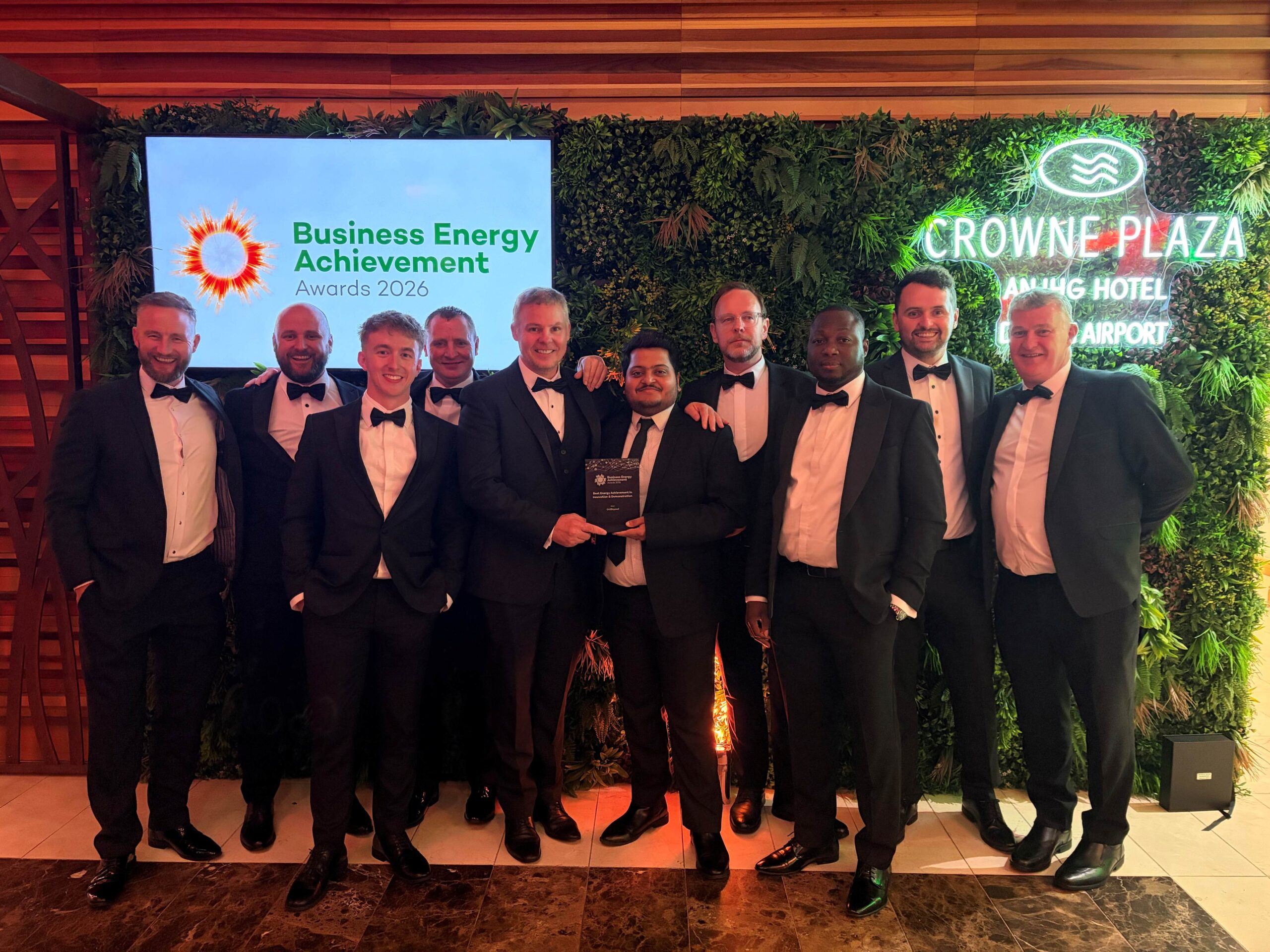
GridBeyond named a Business Energy Achievement Awards winner for innovation in data centre energy flexibility
Read More -

17 September 2026
2 minute read
MPs call for removal of “net zero” from government terminology
Read More