News
better business decisions
Posted 5 months ago | 5 minute read
Earth Day 2026: climate action needs energy flexibility
Every year on Earth Day, the world pauses to take stock of our relationship with the planet. In 2026, the energy sector stands at a defining crossroads where the choices we make in the next few years will determine whether net-zero targets remain within reach.
The clean energy revolution is well underway. Wind and solar now account for a growing share of electricity generation across Europe, North America, and beyond. Battery storage is scaling rapidly. The challenge is that grids which were built for predictable, centralised power generation are now being asked to orchestrate an entirely new kind of energy system. The answer isn’t to slow down the renewables rollout but to make our energy system smarter, more responsive, and more resilient. That’s where energy flexibility comes in.
What is energy flexibility and why does it matter?
Energy flexibility refers to the ability of electricity consumers to adjust when and how they use power in response to signals from the grid. Rather than simply drawing electricity whenever it’s needed, flexible energy users can shift loads, reduce consumption at peak times, or even feed stored energy back into the system.
When renewable generation is abundant and prices are low, flexible users can ramp up consumption by charging batteries, running industrial processes, or pre-cooling buildings. When supply is tight or the grid is under stress, users can reduce demand, reducing the need to fire up expensive, polluting peaker plants.
Flexibility is increasingly recognised by grid operators, regulators, and energy policy makers as essential infrastructure for decarbonisation. The International Energy Agency has made clear that demand-side flexibility will need to grow significantly by 2030 to keep the 1.5°C pathway alive. The question isn’t whether flexibility is needed but how quickly we can scale it.
Benefits for business
Energy flexibility delivers real value to the businesses that participate in addition to stabilising the grid, and accelerating decarbonisation:
- energy users can generate revenue streams by participating in balancing markets and frequency response programmes. At the same time, smart load-shifting reduces exposure to peak tariffs, delivering direct cost reductions to operating budgets
- grids respond to imbalances by spinning up gas-fired peaker plants. Demand flexibility offers a cleaner, faster alternative, maintaining stability without burning gas
- flexible demand soaks up surplus clean generation, ensuring that every kilowatt-hour of wind and solar reaches an end user rather than being wasted
- reducing peak demand through flexibility means grid operators can delay or avoid costly upgrades to transmission and distribution infrastructure
- by displacing fossil fuel generation and enabling greater renewable integration, demand-side flexibility delivers measurable carbon reductions. For businesses with net-zero commitments, participation in flexibility programmes represents a direct, verifiable contribution to Scope 2 emissions reduction
- flexible energy systems are inherently more resilient. Businesses with intelligent energy management are less exposed to price spikes, supply shocks, and grid emergencies, building operational robustness alongside environmental performance
GridBeyond’s role in the energy transition
GridBeyond is at the forefront of making energy flexibility a commercial and operational reality for businesses across Ireland, Great Britain, Europe, Japan and North America. Our mission is straightforward: to connect the intelligence of industrial and commercial energy assets with the needs of the grid, unlocking value for all parties in the process.
Our AI-powered platform, Point, sits at the core of everything we do. It monitors energy assets in real time, predicts market conditions, and makes intelligent dispatch decisions to maximise both grid contribution and commercial return for our customers. From large industrial manufacturers to hospitals, data centres, and retail chains, GridBeyond aggregates flexible capacity across diverse energy users and presents it as a coherent, reliable resource to the markets and grid operators that need it most.
GridBeyond removes the complexity that has historically kept businesses on the sidelines of flexibility markets. We handle market access, compliance, forecasting, and dispatch, allowing our customers to focus on their core operations while their energy assets work harder for the grid and for the planet.
A moment for action
Earth Day has always been a reminder that environmental progress requires not just good intentions, but tangible, systemic change. In 2026, with the window for meaningful climate action narrowing, the businesses cannot afford to wait for perfect conditions or perfect policy. The tools to make a difference exist today.
Energy flexibility is available now, it is commercially proven, and it is scalable across the industrial and commercial assets. The businesses that choose to become grid-flexible are making a forward-looking decision that benefits their bottom line, their resilience, and their planet.
At GridBeyond, we are proud to work alongside hundreds of businesses that have made this choice and we are committed to expanding that community. Because we know that the energy transition isn’t something that happens to businesses; it’s something that businesses can actively drive, with the right partner and the right technology.
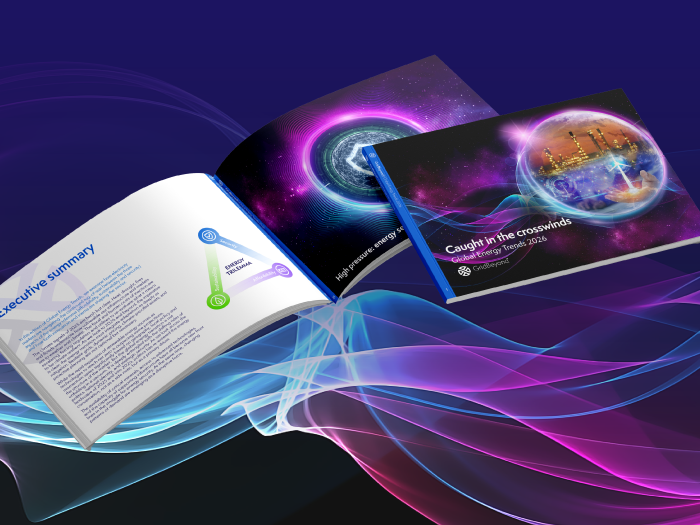
Caught in the crosswinds | Global Energy Trends 2026
In this edition of Global Energy Trends, we examine how electricity markets are navigating the continued tug-of-war between the three aspects of the energy trilemma (affordability, sustainability and security) and how both innovation and inertia are shaping the sector.
Learn moreLatest energy insights
-
15 October 2026
6 minute read
Following the forecast: the hidden risk in battery optimization | Q&A
Read More -
7 October 2026
4 minute read
Private wires in Ireland: a new route to power for data centres and industry?
Read More -
7 October 2026
7 minute read
What is a distributed energy network, and why are businesses building their operations around one?
Read More -
25 September 2026
3 minute read
The age of electricity: the growing role of electricity in economies and energy systems
Read More -
 Awards
News
Awards
News
17 September 2026
2 minute read
GridBeyond named a Business Energy Achievement Awards winner for innovation in data centre energy flexibility
Read More -
17 September 2026
2 minute read
MPs call for removal of “net zero” from government terminology
Read More