News
better business decisions
Posted 4 months ago | 5 minute read

From single site to VPP
Rising price volatility, tightening decarbonisation targets, and growing grid constraints are forcing a fundamental rethink of how businesses engage with power markets.
As the power sector globally moves towards increasingly decentralised assets terms such as microgrids, virtual power plants (VPPs), distributed energy resources (DERs) and distributed energy resource management systems (DERMS) are becoming commonplace. These terms are all related to systems that focus on decentralising power generation, improving grid stability, and integrating renewable energy sources. But what is the difference between them and how can multi-site operators use their flexibility as a portfolio-level strategic asset?
The terminology
Before answering that question, it helps to understand what each term means. DERs are the building blocks. Small-scale assets located close to the point of consumption, including battery storage, on-site solar, flexible loads, and smart EV charging. DERMS is the software layer that monitors and controls those assets in real time. A microgrid is a localised energy network that can operate independently from the main grid if required. And a VPP brings it all together through a cloud-based, software-driven system that aggregates and coordinates DERs across multiple sites into a single, intelligently managed entity.
Where a microgrid is typically confined to one location, a VPP operates at scale, linking assets across an entire portfolio and enabling them to act in concert. That distinction matters for organisations with estates spanning dozens or hundreds of sites.
As the proportion of renewables continues to grow in the energy mix, their inherent intermittency creates a growing need for flexible resources that can respond rapidly to shifting grid conditions. VPPs fill this gap. By harnessing technologies such as IoT, artificial intelligence, and real-time data analytics, they can coordinate distributed assets to deliver the kind of reliable, responsive capacity that was once only able to be provided by conventional power stations.
Why portfolio-level thinking changes everything
Many organisations have already deployed on-site flexibility assets. The problem is that when these assets are managed in isolation, their potential value goes unrealised. A portfolio-based approach changes the equation.
By aggregating flexibility across multiple sites, organisations can meet the minimum thresholds required to participate in wholesale energy markets, access revenue streams that single sites cannot reach alone, and make smarter dispatch decisions based on regional price signals and grid needs. Diversification across a portfolio also reduces operational risk and insulates the business from localised disruptions. The financial and strategic benefits can be significant: increased flexibility revenues, reduced energy costs, stronger returns on capital investment, and a credible, measurable contribution to decarbonisation goals.
A structured path to portfolio VPPs
Scaling from single-site optimisation to a portfolio VPP requires a staged approach built on four key pillars.
- asset mapping and segmentation is the starting point. Organisations must develop a consolidated view of all controllable assets across their estate, assessing technical flexibility, market eligibility by region, and implementation complexity. This creates a prioritised rollout roadmap focused on high-value, low-friction opportunities first
- standardising controls, data models, and security is what makes scale possible. Without consistent communication protocols, unified data structures, and robust cybersecurity frameworks, portfolio-level optimisation quickly becomes operationally expensive and risky. Standardisation from the outset dramatically accelerates the onboarding of new sites while reducing long-term compliance burden
- rolling out automation allows organisations to capture value quickly while maintaining operational confidence. Best practice involves regional deployment aligned with local market rules, automated dispatch based on price signals and forecasts, and a gradual shift from human oversight to autonomous operation as trust in the system grows
- continuous benchmarking and improvement ensures the VPP keeps evolving. AI-driven analytics refine forecasting accuracy, cross-site benchmarking surfaces underperforming assets, and feedback loops connect real-world operational data back to investment decisions, creating a self-optimising system that becomes more valuable as the portfolio grows
The opportunity ahead
The shift from single-site energy management to portfolio-scale VPPs is a structural change in how large organisations participate in the energy system. The companies who build the foundations now will be best placed to capture value as energy markets become increasingly decentralised, digital, and dynamic. Flexibility, at portfolio scale, is no longer just an operational lever. It is a competitive advantage.
GridBeyond makes VPP participation simple and valuable. If your site has battery storage, CHP, onsite generation, or flexible energy demand, you can participate in our VPP. We handle market access and optimisation on your behalf. Each site is assessed individually to ensure participation aligns with your operations, with full visibility and control over how your assets are used.
Our technology already connects more than 5GW of load and over 900MW of battery storage across 1400 client sites globally. When you join, you benefit from established market access, proven optimisation, and the scale of a global network.
Global| Whitepaper| From single site to Virtual Power Plant
In this whitepaper we outline a practical pathway for scaling flexibility from individual sites into a fully-integrated Virtual Power Plant (VPP). By standardising data, controls and governance, organisations can unlock new revenue streams, reduce risk, and actively participate in energy markets while supporting grid stability.
Learn moreLatest energy insights
-
15 October 2026
6 minute read
Following the forecast: the hidden risk in battery optimization | Q&A
Read More -
7 October 2026
4 minute read
Private wires in Ireland: a new route to power for data centres and industry?
Read More -

7 October 2026
7 minute read
What is a distributed energy network, and why are businesses building their operations around one?
Read More -
25 September 2026
3 minute read
The age of electricity: the growing role of electricity in economies and energy systems
Read More -
 Awards
News
Awards
News
17 September 2026
2 minute read
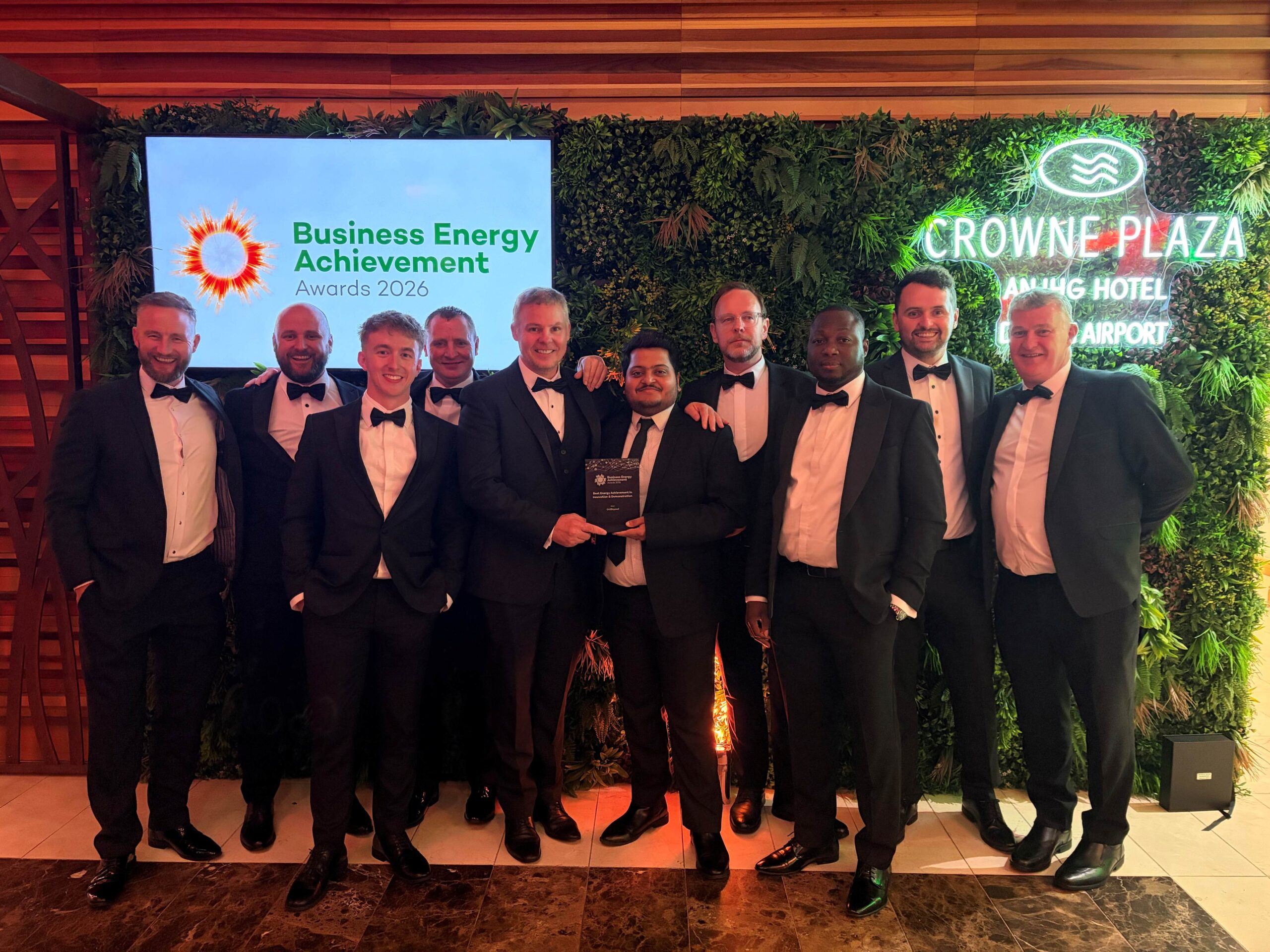
GridBeyond named a Business Energy Achievement Awards winner for innovation in data centre energy flexibility
Read More -

17 September 2026
2 minute read
MPs call for removal of “net zero” from government terminology
Read More