News
better business decisions
Posted 2 months ago | 6 minute read

Why are energy costs so volatile? A guide for businesses
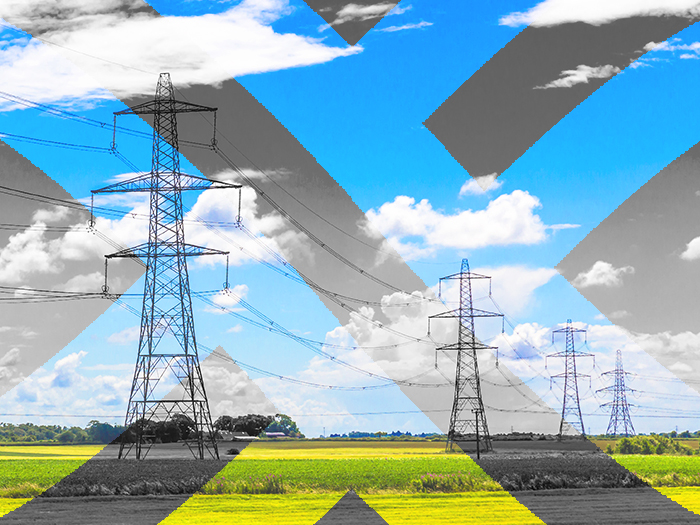
Electricity costs are volatile because wholesale prices are still largely set by the cost of gas, even as renewables supply a growing share of the grid. Weather-driven wind and solar output makes supply unpredictable hour to hour, network, policy, and balancing charges are rising and because the UK’s exposure to global gas markets and its position at the edge of Europe’s interconnected grid leave it more exposed to price shocks than many neighbouring markets. For large energy users, this means the bill is no longer just “how much power did we use” but it’s increasingly “when did we use it, and how did the market behave at that moment.”
Here we spoke to GridBeyond Head of Demand Response UK, Shawn Duckett about the structural reasons UK business energy costs swing the way they do, and what that volatility means in practice for budgeting, procurement, and operations.
Gas still sets the price, even on windy days
The UK’s wholesale electricity price is determined through a marginal pricing system: every generator that runs gets paid the price offered by the most expensive generator needed to meet demand at that moment (usually a gas-fired power station). This is true even on days when wind and solar are supplying the majority of the grid, because gas plants are typically the ones brought on last to balance the final increment of demand.
This means that wholesale electricity prices track gas prices closely, despite gas now generating a minority of the UK’s actual electricity in many periods. A spike in gas prices can push UK power prices up even when the domestic generation mix is dominated by renewables and nuclear.
The UK imports a significant share of its gas, and even domestic production is priced against international benchmarks. That means events with no direct connection to the UK such as conflict affecting pipeline flows, LNG demand spikes in Asia, OPEC+ decisions, extreme weather in gas-producing regions, can move UK electricity prices. Since the 2022 European gas supply crisis, this exposure has been widely recognised as a structural vulnerability rather than a temporary shock.
Renewables cut costs but increase volatility
Wind and solar have near-zero marginal cost once built, which is why periods of high renewable output often coincide with low or even negative wholesale prices. But this cuts both ways: the same weather-dependence that delivers cheap power on a windy afternoon can flip to a supply-tight, price-spiking evening peak within hours.
In a renewables-heavy grid, average prices trend down, but the spread between the cheapest and most expensive hours widens. A business paying a flat contracted rate doesn’t feel this but one exposed to half-hourly wholesale pricing, or to a supplier’s pass-through charges, feels it directly. We are seeing more business energy contracts moving toward structures that expose customers to at least some of this volatility, because suppliers themselves are managing the same underlying risk.
Non-commodity costs are now a majority of the bill for many users
For a growing number of businesses the energy commodity itself is no longer the largest line item. Network charges, policy costs, and balancing costs (collectively “non-commodity costs”) now often account for 50%-60% or more of a large user’s total bill. That’s distribution and transmission use-of-system charges, which fund the physical infrastructure moving power to a site and vary by region and time band. It’s policy costs that fund schemes like the Renewables Obligation and Contracts for Difference, which are set by government rather than by supply and demand. And it’s Capacity Market and balancing costs, which pay generators and increasingly demand-side and storage providers to be available when the system needs them, funded through a levy that flows through to consumer bills. None of these move in line with wholesale prices, which is part of why a business’ true cost per unit can rise even when the underlying commodity price is falling.
Market design itself adds volatility
Beyond the fundamentals of supply, demand, and fuel cost, the way the GB market actually operates creates its own price movement. The Balancing Mechanism lets the grid operator instruct generators and flexible assets up or down in near real time to keep the system stable, and prices there can spike well above day-ahead levels during tight periods. Imbalance charges penalise suppliers (and by extension, some consumer contracts) for deviating from forecast consumption or generation, which adds cost that’s tied to forecasting accuracy rather than actual energy use. And ongoing structural reform keeps a level of uncertainty in the system even where the intent of reform is to reduce volatility over the long run.
What this means for your business
Put together and costs are volatile at several different timescales simultaneously and a single annual budget line can’t capture that.
Within a day, it’s weather and demand peaks. Within a year, it’s seasonal gas demand and capacity market cycles. Year to year, it’s policy cost resets and broader gas market cycles. And structurally, it’s the ongoing shift from a gas-dominated to a renewables-dominated grid, with market reform trying to keep pace. For an energy-intensive business, that compounding effect makes flat-rate budgeting genuinely risky, and it makes when you use energy just as relevant as how much you use.
Managing volatility rather than just absorbing it
The businesses managing this well are building flexibility into how and when they use energy, so volatility becomes something they can work with rather than just something that happens to them. That means shifting flexible load away from peak-price and peak-network-charge periods, participating in demand response and balancing services so flexibility becomes a revenue stream rather than a pure cost, using on-site generation and storage as a hedge against extreme price events, and having a platform that can act on real-time price and system signals faster than a manual process ever could.
Understanding why costs are volatile is the first step. The next is understanding how exposed your site and usage profile actually is because that’s where the real opportunity sits, in turning volatility from a risk into something you can actively use to your advantage.
This is exactly the gap GridBeyond’s platform is built to close. GridBeyond connects a site’s flexible load, on-site generation, and storage assets directly into the markets driving that volatility (balancing services, capacity markets, and wholesale trading) so flexibility becomes an active revenue stream instead of a passive cost. The shift GridBeyond enables is straightforward: from being a price-taker in a volatile market, to being an active participant who gets paid for the flexibility they already have.

Intelligent demand side response- White Paper
In today’s fast-paced industrial landscape, optimising production schedules isn’t just about meeting deadlines; it’s also about navigating volatile energy prices. Fluctuations in energy costs can significantly impact operational expenses, making it imperative for businesses to devise strategies that mitigate against these costs.
Learn moreLatest energy insights
-
15 October 2026
6 minute read
Following the forecast: the hidden risk in battery optimization | Q&A
Read More -
7 October 2026
4 minute read
Private wires in Ireland: a new route to power for data centres and industry?
Read More -
7 October 2026
7 minute read
What is a distributed energy network, and why are businesses building their operations around one?
Read More -
25 September 2026
3 minute read
The age of electricity: the growing role of electricity in economies and energy systems
Read More -
 Awards
News
Awards
News
17 September 2026
2 minute read
GridBeyond named a Business Energy Achievement Awards winner for innovation in data centre energy flexibility
Read More -

17 September 2026
2 minute read
MPs call for removal of “net zero” from government terminology
Read More