News
better business decisions
Posted 10 hours ago | 4 minute read

How AI is helping data centres lead the next wave of grid flexibility
The convergence of volatile energy markets, decarbonisation targets and rapidly evolving grid infrastructure has pushed flexibility to a boardroom priority. For system operators, the ability to call on responsive, distributed demand is essential to balance the system as renewables penetration increases. At the centre of this shift sits an unlikely but increasingly prominent player: the data centre.
A sector built for flexibility
Data centres were not traditionally associated with demand response. Their reputation has been one of non-negotiable consumption, running at full capacity around the clock to meet the availability requirements of the digital economy. But data centres are ideally suited to flexibility programmes. They operate continuously, giving operators a constant window of opportunity to optimise. They carry significant load, meaning even modest adjustments can deliver meaningful value.
Many are equipped with uninterruptible power supplies, on-site generation and battery storage assets that can be coordinated intelligently. And as hyperscale and colocation facilities continue to grow, their aggregate impact on the grid is becoming too large to ignore.
The question is no longer whether data centres can participate in flexibility markets. It is how to make that participation commercially attractive and operationally safe.
The complexity problem, and how AI solves it
Flexibility requires orchestrating multiple assets simultaneously, responding to signals that shift minute-by-minute, managing constraints that vary by site, and doing this without compromising the core service the facility exists to provide. This is precisely where AI changes the equation.
Instead of relying on manual decision-making or static rules, AI enables continuous, real-time optimisation across all available assets. It processes market prices, weather forecasts, asset performance data and grid signals simultaneously, translating that complexity into actionable decisions within seconds. It does not just react to conditions; it anticipates them.
By forecasting both system needs and individual asset behaviour, AI can position flexible loads ahead of time, ensuring participation is economically optimal without ever putting operations at risk. What this creates is a new operational layer sitting between market signals and physical infrastructure.
Occasional response to continuous value
In the past flexibility meant event-driven demand response: occasional curtailments, peak period adjustments, or participation in specific ancillary service markets. AI enables something more ambitious.
Instead of asking whether an asset can respond right now, the question becomes what the optimal operating strategy is at every moment, across every available value stream. Flexibility becomes always on. Revenue streams stack naturally. And because the complexity is handled at the platform level, participation scales without placing additional burden on site teams. For data centre operators managing energy costs that can represent 40% or more of total operating expenditure, this is a structural advantage.
Confidence through control
Data centre operators carry significant responsibility to their customers, and any participation in flexibility programmes must be designed with that front of mind. The most effective AI platforms address this by enhancing operational control rather than reducing it.
Asset-level constraints, availability windows, thermal limits and user-defined preferences are all embedded into the optimisation logic. Every decision is explainable and auditable. Operators retain override capability at all times. Over time, as systems consistently deliver value confidence grows and the scope for participation naturally expands. GridBeyond works with data centre operators to build exactly this kind of confidence, developing flexibility strategies that are commercially meaningful from day one and operationally robust by design.
The bigger picture
The energy transition depends on flexibility. As renewable generation continues to grow, the ability to match supply and demand dynamically becomes more valuable, not less. Data centres, given their scale, controllability and rate of growth, are positioned to be among the most significant contributors to that flexibility. AI is what makes that contribution practical. By making optimisation continuous, intelligent and safe, it transforms flexibility from an operational challenge into a competitive advantage.
For data centre operators willing to engage, the opportunity is substantial. And with the right platform in place, the path to participation is far simpler than it might appear.
Latest energy insights
-
 Press Release
26 March 2026
3 minute read
GridBeyond and Optima Energy sign agreement to help customers unlocking new revenues
Read More -
26 March 2026
4 minute read
How AI is helping data centres lead the next wave of grid flexibility
Read More -
 Brochure
24 March 2026
1 minute read
Whitepaper| USA | Risk transfer solutions in merchant energy markets | Downside protection strategies for battery storage assets
Read More -
 Press Release
17 March 2026
3 minute read
Samsung Ventures joins GridBeyond’s shareholder base as part of a €12M equity investment
Read More -
16 March 2026
4 minute read
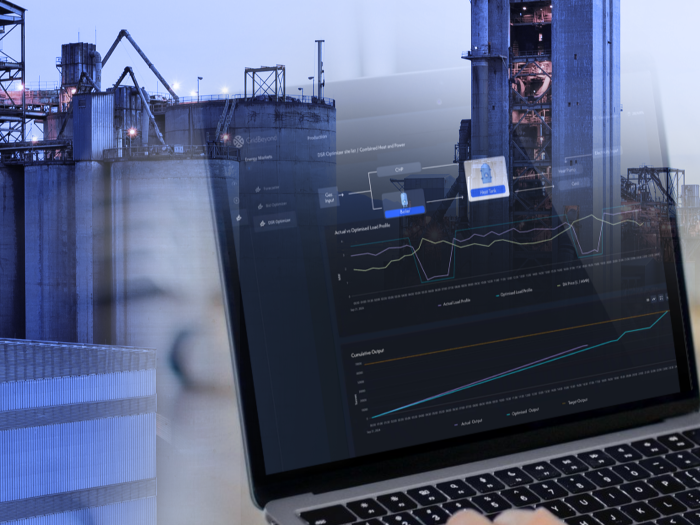
What is demand flexibility and what opportunities does it offer businesses?
Read More -

16 March 2026
2 minute read
Government reforms could see data centres prioritised in connection queue
Read More -

16 March 2026
7 minute read
From volatility to value: how businesses can take control of their energy future
Read More