News
better business decisions
Posted 1 month ago | 5 minute read
The future of energy storage: trends, technology and key deployments
As countries accelerate the transition to cleaner power systems, energy storage is emerging as a cornerstone of energy security, affordability, and grid resilience. For governments, grid operators, and businesses, the question is no longer whether to invest in storage; but how to deploy it to unlock maximum value.
At GridBeyond, this shift is visible across global markets, from large-scale battery projects in California to co-located solar and storage assets in the UK and Ireland. Together, renewables, batteries, and digital optimisation are redefining how electricity systems are planned, operated, and monetised.
Renewables, security and competitiveness
Investment in renewable energy is increasingly viewed as a strategic response to volatile global fuel markets and geopolitical uncertainty. By producing power domestically from wind, solar, and other renewable resources, countries can decouple their energy systems from fossil fuel price shocks while improving long-term affordability.
The economics underpinning this transition are compelling:
- renewables backed by storage and transmission are already the lowest-cost form of new electricity generation; competitive with new coal today and materially cheaper by 2030
- 91% of newly commissioned utility-scale renewable capacity now delivers electricity at a lower cost than the cheapest new fossil fuel alternative on a levelised cost of electricity (LCOE) basis
- in 2024 alone, renewables helped avoid $467B in fossil fuel costs, reinforcing their role in energy security and economic resilience
- total installed costs for renewable power fell by more than 10% between 2023 and 2024 across most technologies, with offshore wind remaining broadly stable.
Why energy storage is essential
As renewable penetration rises, power systems must manage greater variability. This elevates the importance of ancillary services, including:
- frequency response
- voltage control
- system inertia
- operating reserves
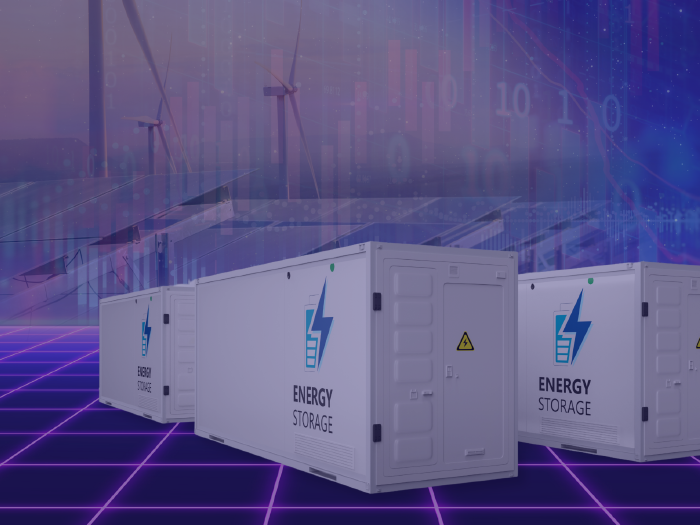
Delivering these services at scale depends on enabling technologies such as battery energy storage systems, digitalisation, and hybrid renewable projects. Batteries play a pivotal role in modern energy systems by storing surplus renewable energy when supply exceeds demand and releasing it when generation falls short. They also provide fast-acting, flexible capacity that can respond in milliseconds; something traditional generation cannot achieve as effectively.
For businesses and asset owners, batteries also offer value, providing:
- lower electricity costs through peak shaving and price arbitrage
- new revenue streams from ancillary services and wholesale markets
- enhanced sustainability credentials and emissions reduction
But a battery isn’t just about capacity; it’s about making that capacity work efficiently in real-time markets. As grids become more dynamic, digital platforms and AI-driven optimisation are playing a central role in maximising asset performance. This means a battery is only as valuable as the intelligence controlling it.
The role of technology
Software is becoming just as important as hardware in energy storage. More advanced analytics and digital twin models allow operators to forecast battery state-of-charge, optimise multi-service stacking (e.g. energy, frequency, and capacity markets), and dynamically respond to pricing signals.
This means:
- real-time forecasting of prices, demand, and asset availability
- intelligent dispatch and bidding strategies
- continuous learning to adapt to changing market conditions
These capabilities extend the economic life of assets, improve dispatch accuracy, and unlock additional revenue streams.
Diverse projects and services
From large-scale batteries to co-located renewable projects and emerging long-duration storage solutions, energy storage is reshaping how power systems operate. By combining advanced software, AI optimisation, and market expertise, GridBeyond is helping asset owners, businesses, and grid operators unlock the full value of flexibility.
One of GridBeyond’s most prominent engagements is with the Big Rock Battery Energy Storage System (BESS) in Southern California. The system is rated 200MW/400MWh and owned by Gore Street Energy Storage Fund. GridBeyond provides scheduling co-ordinator, trading, and energy optimisation services for the asset, helping it capture revenue across multiple California Independent System Operator (CAISO) markets. AI-powered Bid Optimizer matches market price forecasts with real-time battery performance, enabling bids and dispatch decisions that aim to maximise returns and grid impact.
GridBeyond’s portfolio isn’t limited to large grid-scale batteries. Other key deployments include:
- Northwold 7.5MW BESS in the UK: co-located with solar PV, this project uses GridBeyond’s platform to optimise battery charging and discharging based on market signals and grid requirements.
- Multiple batteries in ERCOT (Texas): GridBeyond’s AI optimisation has been selected by partners like SmartestEnergy US to maximise revenues from price volatility in wholesale markets.
- Japan Frequency Containment Reserve (FCR) project: in partnership with PORT Inc., GridBeyond completed a frequency response operation (a first in the market) showing how distributed storage can support grid balancing.
GridBeyond’s technology also supports other businesses with technical capabilities:
- ABB: through a deepening partnership, GridBeyond helps power Battery Energy Storage Systems-as-a-Service (BESS-aaS) offerings, combining hardware, software, financing support, and lifecycle services for commercial and industrial customers.
- ep Group (UK): a strategic partnership to deploy AI-enabled optimisation across a growing fleet of storage assets.
These alliances help GridBeyond deliver full-stack solutions and lower barriers for businesses to participate in energy markets.
By advancing AI optimisation, fostering strategic partnerships, and participating in large-scale projects like the Big Rock battery, GridBeyond illustrates how technology can shape the future of energy storage and grid services.
Latest energy insights
-
 Press Release
26 March 2026
3 minute read
GridBeyond and Optima Energy sign agreement to help customers unlocking new revenues
Read More -

26 March 2026
4 minute read
How AI is helping data centres lead the next wave of grid flexibility
Read More -
 Brochure
24 March 2026
1 minute read
Whitepaper| USA | Risk transfer solutions in merchant energy markets | Downside protection strategies for battery storage assets
Read More -
 Press Release
17 March 2026
3 minute read
Samsung Ventures joins GridBeyond’s shareholder base as part of a €12M equity investment
Read More -

16 March 2026
4 minute read
What is demand flexibility and what opportunities does it offer businesses?
Read More -

16 March 2026
2 minute read
Government reforms could see data centres prioritised in connection queue
Read More -

16 March 2026
7 minute read
From volatility to value: how businesses can take control of their energy future
Read More