News
better business decisions
Posted 1 week ago | 6 minute read

What businesses need to know about TNUoS Changes in 2026
From April 2026, a shift in how electricity network costs are structured is taking effect across Great Britain. The change centres on the Transmission Network Use of System (TNUoS) Demand Residual charge.
In this article we explore what TNUoS is and what is changing.
What is TNUoS?
Unlike most electricity costs, TNUoS charges are not based on how much energy your business consumes. It is a fixed cost tied to the level of grid capacity you have agreed with your Distribution Network Operator (DNO).
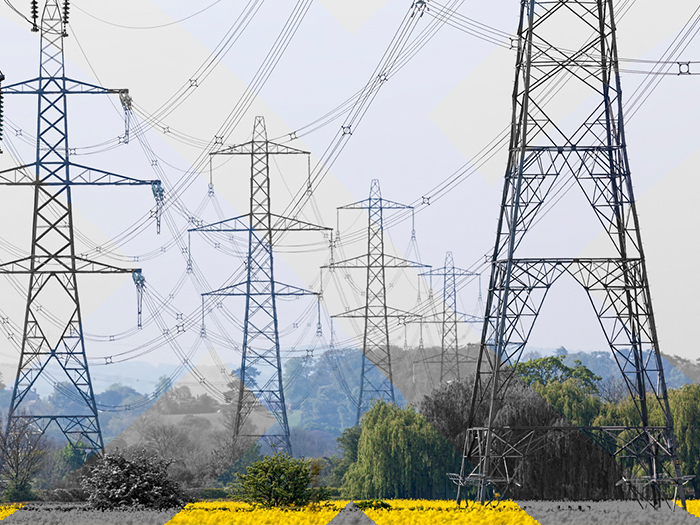
Charges are levied by transmission companies to pay for carrying electricity from power stations through high voltage lines to the local distribution networks. These charges are used to fund the maintenance and upgrading of the transmission network.
- Some TNUoS charges vary by region, but the majority are recovered via standing charges that are the same nationally
- The level of the TNUoS standing charge is determined by the size of a site’s connection and the voltage at which they connect
- TNUoS forms a key part of the non-commodity portion of electricity bills, representing network-mandated costs that suppliers typically pass through to business customers and can represent around 5% of consumer electricity costs
The National Energy System Operator (NESO) publishes the TNUoS tariffs annually by 31 January to take effect from 1 April each year.
What is changing and why
The TNUoS Demand Residual is part of the RIIO-ET3 regulatory framework, which sets the allowed revenues for transmission network owners over a five-year period. The rise in charges is primarily driven by the need to reinforce and expand the grid to carry growing volumes of renewable energy from remote areas to where it is needed, as well as to support the UK’s net zero targets.
According to the National Energy System Operator’s (NESO) Five-Year View, the total TNUoS revenue to be collected for 2026-27 is forecast to be £8.9B (an increase of £2.7B from the 2026-27 Initial Forecast). Revenue to be recovered through the demand residual is forecast to be £7.52B in 2026-27 rising to £11.75B by 2030-31.
Crucially, these are fixed standing charges levied per meter, per day. That means reducing consumption will not reduce this part of your bill. Businesses that have invested in energy efficiency measures may therefore still face rising costs in this area as the charge reflects capacity rather than usage.
Who is affected
All grid-connected businesses will feel the impact to some degree, but the effect is not uniform. Energy-intensive industries, large commercial sites with high contracted capacity, and organisations connected at higher voltage levels are particularly exposed. These businesses tend to rely on significant grid capacity to operate, even when their actual consumption fluctuates.
Businesses connected at higher voltage levels face the steepest increases. For example, an HV3 site will see annual TNUoS residual charges rise from around £67,677 in 2026-27 to more than £115,000 by 2030-31, while EHV4 sites face costs rising from £2M to over £4.1M across the same period.
The broader context
UK businesses already face some of the highest electricity costs in Europe. Non-commodity costs represent around 60% of a typical energy bill, compared with a 40% commodity cost. The increase in fixed network charges adds further pressure at a time when many organisations are working hard to remain competitive and to reduce their environmental footprint.
Published on 22 February the Cutting Business Energy Costs: The case for action report, from the Confederation of British Industry (CBI) and Energy UK. warns that rising energy bills are forcing companies to rethink expansion plans, with survey data showing almost 90% of businesses had seen energy costs increase over the past three years and four in ten planned to cut back investment as a result.
The report notes that UK companies face some of the highest electricity costs in the developed world, with industrial prices nearly two-thirds above the median of IEA countries and the highest in the G7. For medium-sized companies, electricity prices are around double the EU median, creating a significant disadvantage against overseas competitors and increasing the risk of production moving abroad. Sectors receiving support, such as steel, can still pay 14%-25% more for electricity than counterparts in France and Germany.
The result is not only damaging to international competitiveness, but also risk hindering the scale-up of low-carbon technologies that underpin energy security and resilience.
What businesses can do
While the TNUoS Demand Residual charge cannot be avoided, the broader cost pressures it creates can be meaningfully offset through smarter energy management.
GridBeyond is an AI-powered energy services platform trusted by over 500 sites across the UK and Ireland. Its technology brings together demand-side response, balancing services, peak avoidance, energy trading and on-site optimisation into a single unified platform, giving businesses a far more complete picture of their energy position than traditional approaches allow.
GridBeyond enables businesses to monetise the flexibility that already exists within their operations. By adjusting consumption at times of peak grid stress, participating businesses can generate additional revenue streams through services such as the Capacity Market and the Balancing Mechanism, helping to offset rising fixed network costs. Critically, GridBeyond’s technology is designed to ensure that operational integrity is never compromised in doing so.
For businesses with on-site generation or battery storage, GridBeyond’s platform can optimise how and when those assets operate, reducing dependence on grid capacity and improving the overall economics of those investments. The platform is hardware agnostic, meaning it can work with existing infrastructure or new installations, and is deployed with no capital outlay required from the business.
GridBeyond also helps with strategic planning. Its AI-driven analytics and forecasting tools allow businesses to model their energy costs accurately, understand how the RIIO-ET3 period will affect them year by year, and identify where operational or contractual changes could reduce exposure. As TNUoS residual charges are forecast to continue rising through to 2030-31, having that forward visibility is increasingly valuable.
While the regulatory shift places new and largely unavoidable costs onto businesses, GridBeyond provides the tools, technology and expertise to respond intelligently, turning an energy strategy into an opportunity to generate new revenues, improve resilience and build a more sustainable future.
Latest energy insights
-
 Press Release
26 March 2026
3 minute read
GridBeyond and Optima Energy sign agreement to help customers unlocking new revenues
Read More -

26 March 2026
4 minute read
How AI is helping data centres lead the next wave of grid flexibility
Read More -
 Brochure
24 March 2026
1 minute read
Whitepaper| USA | Risk transfer solutions in merchant energy markets | Downside protection strategies for battery storage assets
Read More -
 Press Release
17 March 2026
3 minute read
Samsung Ventures joins GridBeyond’s shareholder base as part of a €12M equity investment
Read More