News
better business decisions
Posted 5 months ago | 6 minute read

Why flexibility matters in Australia | Q&A
Australia’s energy transition is accelerating, bringing both opportunity and complexity for industrial and commercial (I&C) energy users. Energy is becoming a strategic lever for Australian businesses. Those that embrace flexibility can reduce costs, create new value and build resilience for the future.
In this article we spoke to GridBeyond’s Chief Commercial Officer, Mark Davis to discuss what’s changing, and how businesses can respond.
Q: How would you describe the current state of Australia’s energy market?
We’re seeing a fundamental shift. The rapid growth of renewables, electrification, and decentralised assets is fundamentally changing how the grid operates. Instead of a predictable, supply-led system, we now have a far more dynamic environment where prices can fluctuate significantly.
At the same time, regulatory reform is accelerating to keep pace. The Australian Energy Market Commission has been very active, introducing changes that are designed to enable more flexible, responsive participation from both generators and demand-side assets. Ongoing reforms to integrate price-responsive resources and improve compensation frameworks are aimed at making it more attractive for businesses to actively participate in the market. For I&C businesses, this means energy is no longer a passive cost. It’s becoming something you can actively optimise in real time. Those that adapt to this new reality will be in a much stronger position to manage risk and unlock value.
Q: What role do programs like WDRM and FCAS play in this transition?
They’re central to it. Mechanisms like the Wholesale Demand Response Mechanism (WDRM) and Frequency Control Ancillary Services (FCAS) are effectively the bridge between traditional energy consumption and active market participation.
WDRM, for instance, allows large users to be paid for reducing demand during peak periods, helping stabilise the grid and lower wholesale prices. It’s already delivered measurable benefits and remains a key pathway for demand-side participation. What’s particularly important now is that the AEMC has signalled its intent to evolve and expand this mechanism. A rule change expected to progress through 2026 aims to broaden eligibility.
At the same time, broader reforms such as integrating price-responsive resources into the market will complement WDRM and FCAS by creating new ways for flexible assets to be dispatched and rewarded. What we’re seeing is not just incremental change, but the build-out of an entire ecosystem where flexibility is valued and monetised.
Q: What types of businesses are best positioned to benefit?
Any organisation with flexible load, backup generation, or energy storage has potential. We’re working with manufacturers, data centres, cold storage facilities; businesses that already have the infrastructure but may not realise its value in these markets. But with the direction of upcoming reforms, that pool is expanding.
As eligibility criteria evolve and frameworks become more sophisticated, we’re seeing increasing relevance for data centres, commercial real estate portfolios, and even hybrid sites with batteries or on-site generation. The key is being able respond quickly and reliably to market signals.
Q: With wholesale price volatility and imbalance risk intensifying, how can businesses protect themselves?
As renewable penetration grows and dispatchable generation retires, we’re seeing increasingly sharp price spikes and negative pricing events, sometimes within the same trading day. For businesses exposed to spot prices or operating under contracts with volume-shaped commitments, the consequences of getting this wrong are significant and growing. Most approaches to managing this risk are reactive. Businesses rely on static hedging strategies, historical consumption profiles, or rule-based curtailment logic that simply can’t keep pace with the speed and complexity of the market. That’s where AI-powered digital twins represent a genuine and decisive differentiator.
A true digital twin isn’t just a monitoring dashboard or a simulation layer. It’s a continuously learning model of a site’s energy assets, processes, and constraints that can run thousands of forward-looking scenarios in real time. When that capability is powered by AI, it allows us to anticipate wholesale price movements, model the impact of imbalance across different dispatch intervals, and dynamically optimise load and generation decisions before events occur rather than in response to them.
For businesses, this translates directly into the lowest achievable net cost of operation. Not the lowest tariff, not the best headline contract rate but the lowest total cost when you factor in wholesale exposure, imbalance charges, ancillary service revenue, and operational constraints. An AI-powered digital twin integrates those variables simultaneously and continuously, something no human-driven or rules-based system can do at scale or speed. As wholesale volatility continues to increase, the gap between those who deploy true AI-powered digital twins and those who don’t will only widen.
Q: How is GridBeyond helping businesses to realise real value?
Our role is to simplify and unlock access. We combine AI-driven forecasting, real-time optimisation, and market integration to allow businesses to participate without needing to manage the complexity themselves. That includes responding to FCAS signals in seconds or dispatching demand response into WDRM events automatically.
What’s becoming increasingly important, especially with focus on compliance, bidding behaviour, and even the use of AI in market participation, is having a partner that understands both the technology and the regulatory landscape. GridBeyond bridges that gap. We ensure assets are optimised and able to participate at the right time, without impacting core operations. We also handle the complexity of market participation, so our clients can focus on running their business while capturing new revenue streams.
Q: What should businesses be doing now to prepare?
The first step is understanding your flexibility; what assets you have, and how they could respond. From there, it’s about putting the right systems in place to unlock that value. What’s critical is recognising that regulatory change is accelerating. With AEMC reforms spanning demand response, pricing, compensation, and system security, the market in 2–3 years will look very different from today. Businesses that act early will not only capture immediate value, but will also be better positioned as new mechanisms and incentives come online.
Latest energy insights
-
15 October 2026
6 minute read
Following the forecast: the hidden risk in battery optimization | Q&A
Read More -
7 October 2026
4 minute read
Private wires in Ireland: a new route to power for data centres and industry?
Read More -
7 October 2026
7 minute read
What is a distributed energy network, and why are businesses building their operations around one?
Read More -
25 September 2026
3 minute read
The age of electricity: the growing role of electricity in economies and energy systems
Read More -
 Awards
News
Awards
News
17 September 2026
2 minute read
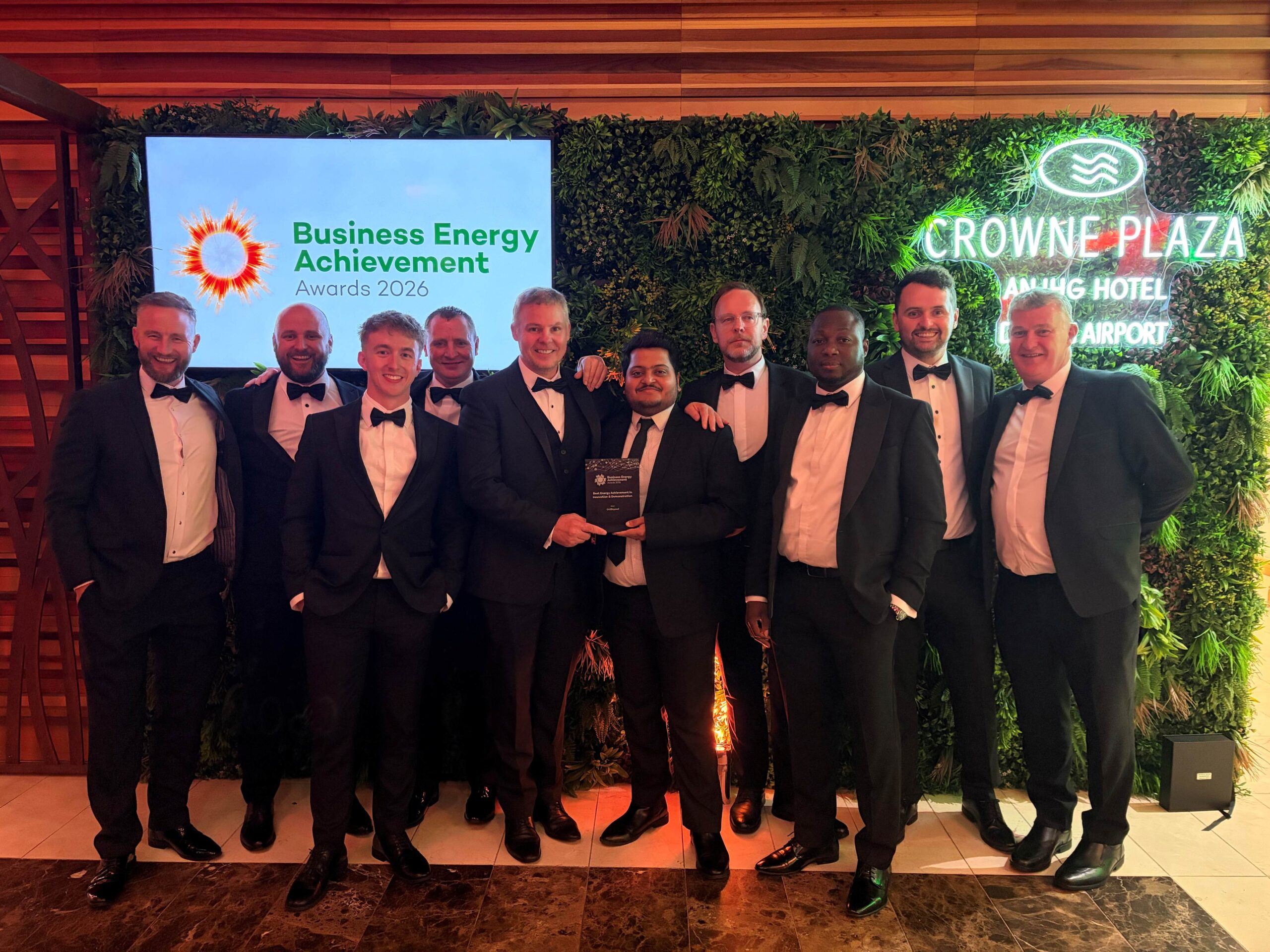
GridBeyond named a Business Energy Achievement Awards winner for innovation in data centre energy flexibility
Read More -

17 September 2026
2 minute read
MPs call for removal of “net zero” from government terminology
Read More