News
better business decisions
Posted 3 months ago | 2 minute read
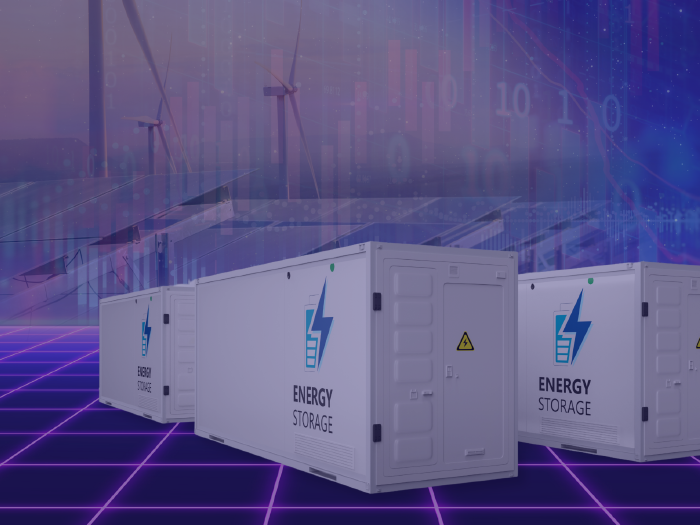
Battery storage is crucial to lest-cost energy transition in Australia: AEMO
Small- and large-scale batteries will be crucial in supporting Australia’s energy transition, according to the latest Integrated System Plan (ISP).
Published on 26 June, the ISPs core finding is unchanged from previous ISPs. It notes that a system built on renewable energy, connected by transmission and distribution networks, firmed with storage and backed up by gas remains the least-cost way to supply secure, reliable electricity through to 2050, while meeting government emissions and renewable energy policies.
The report notes that total underlying NEM consumption is forecast to grow from 205TWh today to about 390TWh by 2050, driven by population and economic growth and electrification of transport, industry and heating. At the same time, coal is being replaced and Australia is relying more and more on renewable generation. In 2010, the NEM had 26 major coal stations generating about 30GW of power. Today, there are 15 generating about 21GW. Meanwhile, about 34GW of grid-scale renewables and batteries were operating in the NEM at the start of 2026, and another 67GW of projects are now progressing through the connections process. Of the progressing projects, 45GW are grid-scale batteries.
Renewables met around 45% of all demand for electricity in the NEM in the 2026 financial year, over 50% in the December quarter of 2025, and reached close to 80% for a half-hour period on 11 October 2025. Small-scale consumer resources alone met over 60% of energy demand across the NEM on 4 October 2025.
By 2050, the ISP notes that renewables and storage would account for 94% of the NEM’s capacity investment and renewables 98% of the total energy consumed. By then, the least-cost optimal development path (ODP) would see almost 120GW of utility-scale wind and solar (about five times the current level), and almost 50GW of utility-scale storage and hydro. New gas supply chain assets would be needed to support 17GW of flexible gas-powered generation. To bring this power to industrial demand centres and across cities, the existing 44,000 km transmission network would need to expand by 6,000 km. Most of the NEM’s remaining coal fleet would withdraw by 2038, with all to withdraw by 2049.
Latest energy insights
-
15 October 2026
6 minute read
Following the forecast: the hidden risk in battery optimization | Q&A
Read More -
7 October 2026
4 minute read
Private wires in Ireland: a new route to power for data centres and industry?
Read More -

7 October 2026
7 minute read
What is a distributed energy network, and why are businesses building their operations around one?
Read More -
25 September 2026
3 minute read
The age of electricity: the growing role of electricity in economies and energy systems
Read More -
 Awards
News
Awards
News
17 September 2026
2 minute read
GridBeyond named a Business Energy Achievement Awards winner for innovation in data centre energy flexibility
Read More -

17 September 2026
2 minute read
MPs call for removal of “net zero” from government terminology
Read More