News
better business decisions
Posted 3 months ago | 3 minute read

Data centres pay cost reflective prices in the NEM: report
A new report commissioned by Amazon Web Services and prepared by Frontier Economics concludes that Australia’s market and regulatory frameworks are well-designed to ensure data centres bear the network and wholesale costs they create.
Published on 12 June, the report looks how the National Electricity Market (NEM) allocates network and wholesale costs when a large data centre connects. The overall finding is that market and regulatory frameworks in the NEM are structured so that data centres pay prices reflecting the incremental network and supply costs they create, while also supporting new investment in clean generation and storage that helps maintain system headroom and ease wholesale price pressure.
At the distribution level, data centres are usually treated as large, individually negotiated connections. If the ongoing network charges they will pay are not enough to cover the extra connection and network upgrade costs they create, they can be required to make an upfront payment, known as a capital contribution. This is designed to prevent those costs from being passed on to small customers, thereby explicitly limiting cross subsidies. At the transmission level, a data centre pays the full cost of assets built just for its connection. It also pays a larger share of broader network charges because those charges are based on peak demand. Since data centres use much more power than households, they pay much more of these costs.
On wholesale prices the report noted that sustained upward pressure depends on whether additional demand increases overall market “tightness”. Where new capacity enters alongside new load, that buffer can be maintained and average wholesale prices need not rise. It points to substantial new entry of generation and storage in the NEM, and the policy imperative to deliver the energy transition. The report also points out that major hyperscalers have become significant counterparties for renewable Power Purchase Agreements in Australia, providing revenue certainty for new generation projects and supporting the investment pipeline.
Data centres may also have a role in absorbing periods of surplus renewable generation that would otherwise be curtailed, improving utilisation of existing renewables and strengthening the investment case for additional renewable supply. The result being system-wide benefits that support, rather than increase, costs borne by households.
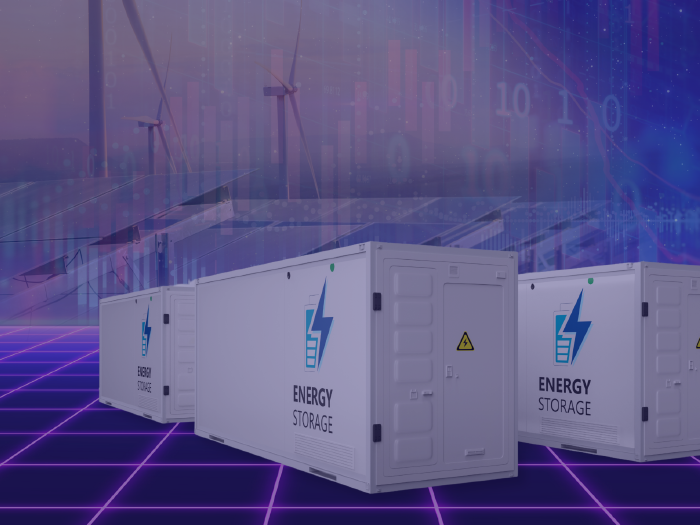
GridBeyond works with data centre operators by co-optimising battery energy storage with compute-side flexibility, rather than relying on either in isolation. When a utility or ISO issues a curtailment signal, GridBeyond’s orchestration engine forecasts available compute headroom, battery state of charge, and the target MW reduction, then splits the call across both resources simultaneously: batteries discharge to bridge the gap in milliseconds, while a compute control partner throttles, pauses or shifts deferrable workloads such as training jobs, all without touching SLA-critical inference. This approach means data centres can meet mandated curtailment obligations in full, every event, regardless of duration, whether it’s a sub-30-second emergency dispatch, a multi-hour sustained peak event, or a scheduled day-ahead market call. Between events, the same infrastructure is put to work earning revenue from capacity markets, ancillary services and demand response, so compliance becomes the floor rather than the ceiling. The result is that data centres protect their interconnection agreements and permits, avoid tariff penalties, and become a more bankable, lower-risk counterparty to grid operators, while enterprise and AI customers retain stable SLAs because flexibility is drawn from headroom rather than critical compute.
Latest energy insights
-
15 October 2026
6 minute read
Following the forecast: the hidden risk in battery optimization | Q&A
Read More -

7 October 2026
4 minute read
Private wires in Ireland: a new route to power for data centres and industry?
Read More -

7 October 2026
7 minute read
What is a distributed energy network, and why are businesses building their operations around one?
Read More -

25 September 2026
3 minute read
The age of electricity: the growing role of electricity in economies and energy systems
Read More -
 Awards
News
Awards
News
17 September 2026
2 minute read
GridBeyond named a Business Energy Achievement Awards winner for innovation in data centre energy flexibility
Read More -

17 September 2026
2 minute read
MPs call for removal of “net zero” from government terminology
Read More