News
better business decisions
Posted 4 months ago | 3 minute read

European Commission sets out digitalisation and AI in energy roadmap
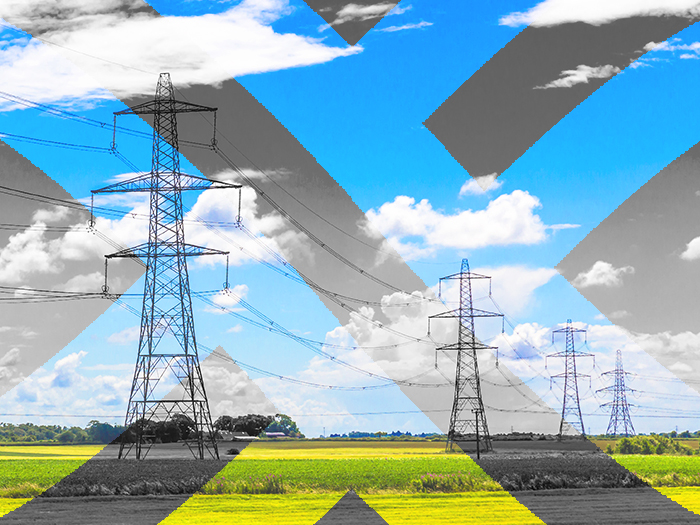
The European Commission has published a Strategic Roadmap for Digitalisation and Artificial Intelligence in Energy; a framework that places smart technology, data and AI at the very core of Europe’s clean energy transition.
Published on 3 June, the roadmap organises the Commission’s ambitions around three pillars. These pillars are complemented by actions addressing the need for trust in AI solutions, stronger cybersecurity of critical energy infrastructure, tailored digital skills needed in the energy industry and international cooperation:
- data centres that are integrated in the energy system in a sustainable and transparent manner, through structured dialogue and commitments by energy-related stakeholders, data centre operators and public authorities, framed by tripartite agreements based on EU best practices. It noted that Data centres currently use ~2.5% of EU electricity, but installed capacity is expected to nearly grow from 12GW to 28GW by 2030. The roadmap called for a model tripartite agreement between data centre operators, energy actors and public authorities, covering grid planning, clean energy sourcing, flexibility, and waste heat recovery. It also recommended a follow-up EU sustainability rating scheme for data centres covering energy, water, clean energy use and flexibility due in 2026, with minimum performance standards coming in 2027
- accelerating the uptake of digital and AI solutions, including improving grid-enhancing technologies, and a faster rollout of smart meters. It noted that grid-enhancing technologies could expand network capacity by up to 40% and cut conventional grid expansion costs by 35%, while digital-enabled flexibility could unlock ~230GW of flexibility by 2030. A legislative proposal to accelerate smart meter rollout is to be issued in 2026, while a Community of Practice for AI grid management with proof-of-concept models due Q127 and first operational models by end of 2027
- a framework for sharing data across EU borders, ensuring secure and efficient cross-border collaboration. It noted that the current cross-border data exchange framework is fragmented with smart energy service providers having to redesign interfaces and renegotiate data access for every national market. The roadmap commits to a simplified cross-border energy data framework, covering both primary use (metering, billing, demand response) and secondary use (AI model training, research). An assessment will be completed in 2026 with further development from 2027
This reflects what the most progressive industrial energy users already know: the grid is no longer a passive utility. It is a dynamic marketplace, and those who can respond intelligently to its signals are rewarded. This is precisely where platforms like GridBeyond are already delivering value. By combining AI-driven energy intelligence with real-time market access, GridBeyond enables industrial and commercial customers to do exactly what the Commission’s roadmap envisions: respond to price signals, reduce consumption costs and turn energy assets into active revenue streams through demand-side flexibility and grid services.
Latest energy insights
-
15 October 2026
6 minute read
Following the forecast: the hidden risk in battery optimization | Q&A
Read More -
7 October 2026
4 minute read
Private wires in Ireland: a new route to power for data centres and industry?
Read More -
7 October 2026
7 minute read
What is a distributed energy network, and why are businesses building their operations around one?
Read More -
25 September 2026
3 minute read
The age of electricity: the growing role of electricity in economies and energy systems
Read More -
 Awards
News
Awards
News
17 September 2026
2 minute read
GridBeyond named a Business Energy Achievement Awards winner for innovation in data centre energy flexibility
Read More -
17 September 2026
2 minute read
MPs call for removal of “net zero” from government terminology
Read More