News
better business decisions
Posted 4 months ago | 4 minute read

Reframing ESG and DEI: the conversation has changed, but the commitment hasn’t
As we approach the mid-point of 2026, there continues to be a lot of noise about whether ESG and DEI still have a place in business strategy. Some argue they were always more about optics than outcomes. Others point to the current political climate as evidence that the tide has turned for good. In this article we asked GridBeyond Head of HR, Laura Merriman, for views on ESG and DEI agenda and where GridBeyond is going.
In my view what we’re witnessing isn’t the end of ESG and DEI. In many organisations, it’s more of a shift in how these priorities are framed, justified, and implemented. The language is changing. The underlying business logic, in many cases, is not.
Regulatory pressure hasn’t eased; the governing principle that businesses must account for how sustainability issues affect them financially, and how they affect the wider world is a legal consideration that doesn’t disappear with a change of administration. At GridBeyond, this context shapes how we think about our own ESG commitments.
As a company whose technology exists specifically to support the energy transition, sustainability is central to what we do. It would be difficult to separate our environmental commitments from our core business model even if we wanted to. That said, we recognise that operating in this space doesn’t make accountability automatic. It requires deliberate effort.
We have been working with our carbon reporting partner Greenly to assess our Scope 1, 2 and 3 emissions; a necessary foundation for any credible sustainability strategy. We’re also developing what we refer to internally as a “Scope 4” methodology: a means of calculating the carbon emissions avoided annually through our customers’ use of flexible energy assets. For a technology company, the downstream impact of what your platform enables matters as much as what your offices consume. Getting that calculation right is a priority for us.
The social and governance dimensions are equally important. At GridBeyond, we have colleagues of 16 nationalities working across our global operations. Managing and developing a workforce that diverse requires deliberate structure, not just good intentions. To move from aspiration to accountability, we partnered with Diversity and Inclusion Ireland to benchmark our EDI practices against recognised standards.
In April 2025, we were awarded the Investors in Diversity Silver accreditation, exceeding national benchmarks in several areas. That outcome reflects work done across the organisation and a sustained focus on ensuring that inclusion is experienced by employees day-to-day, not just documented in policy.
We’ve also committed to gender pay gap reporting and to making our EDI strategy visible and understandable across every level of the business. These aren’t tick-box exercises. A globally distributed team requires active effort to ensure that people feel they belong and have fair access to opportunity, regardless of where they’re based or what their background is. We think that’s worth being rigorous about.
There’s a broader point here too. The argument that diversity and inclusion initiatives improve both talent acquisition and organisational performance is well-evidenced. For a company growing internationally and competing for specialist skills in AI, energy technology and data science, that’s a practical consideration as much as a values one.
The current debate around ESG and DEI is unlikely to resolve neatly. Political sentiment will continue to vary across the markets in which companies like GridBeyond operate, and the regulatory landscape will keep evolving.
What seems clearer is that businesses with long time horizons tend to look past short-term cycles when making structural decisions. Whether the terminology stays the same or shifts, the underlying questions remain: how does a business account for its environmental impact? How does it ensure its people are treated fairly and that its talent pool is as broad as possible? How does it demonstrate that its governance structures are sound? Those questions don’t go away. And working out credible answers to them, backed by measurable action, is something we intend to keep doing.
Latest energy insights
-
15 October 2026
6 minute read
Following the forecast: the hidden risk in battery optimization | Q&A
Read More -
7 October 2026
4 minute read
Private wires in Ireland: a new route to power for data centres and industry?
Read More -

7 October 2026
7 minute read
What is a distributed energy network, and why are businesses building their operations around one?
Read More -
25 September 2026
3 minute read
The age of electricity: the growing role of electricity in economies and energy systems
Read More -
 Awards
News
Awards
News
17 September 2026
2 minute read
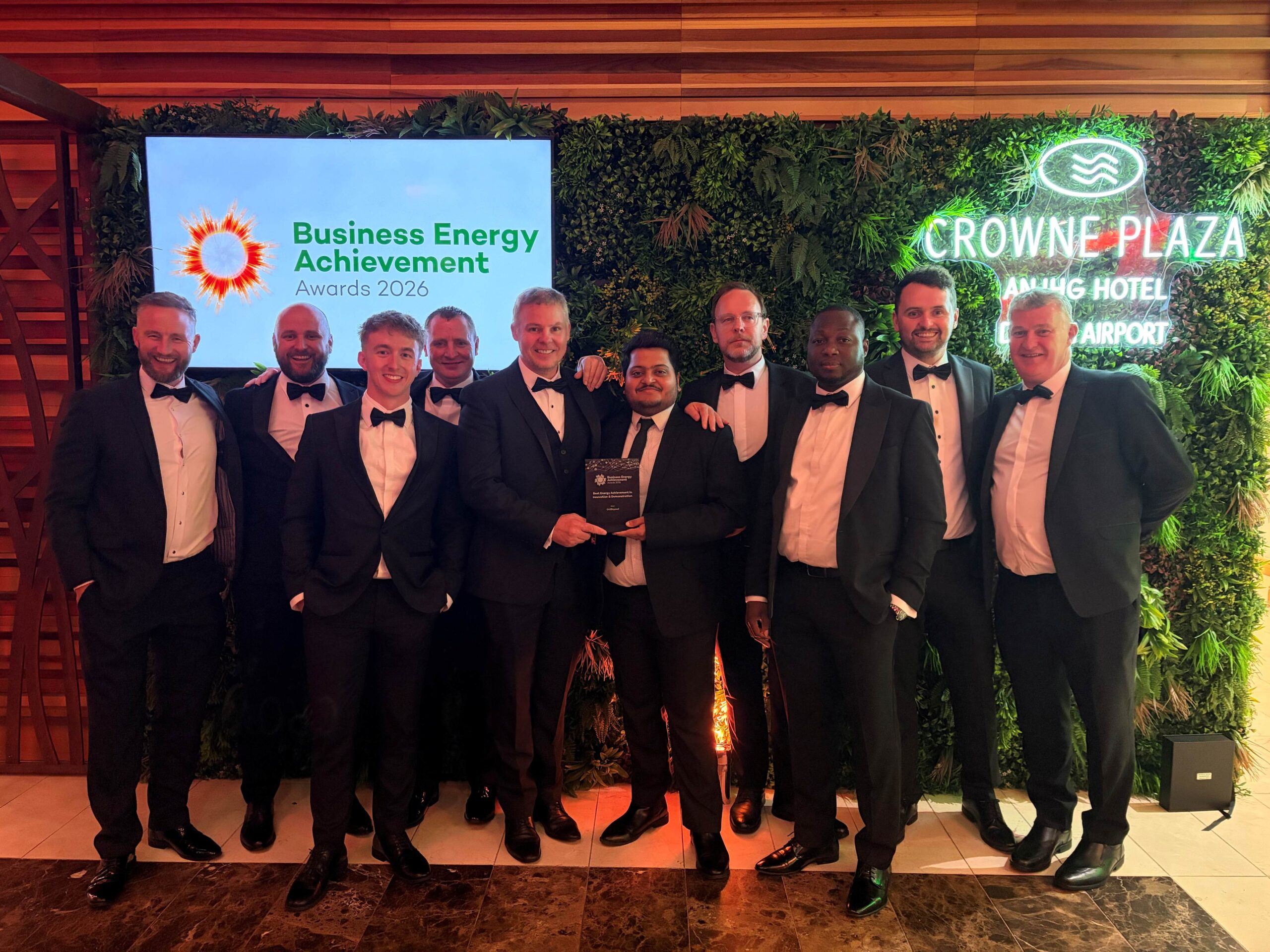
GridBeyond named a Business Energy Achievement Awards winner for innovation in data centre energy flexibility
Read More -

17 September 2026
2 minute read
MPs call for removal of “net zero” from government terminology
Read More