News
better business decisions
Posted 4 weeks ago | 16 minute read
The complete guide to demand response
Learn how demand response works, discover demand response programmes, revenue opportunities, grid balancing and commercial energy flexibility.
The transition to renewable energy, rapid electrification, the growth of battery storage, and increasing demand from sectors such as manufacturing, transport and data centres are placing unprecedented pressure on electricity networks. At the same time, governments and system operators are working to decarbonise power systems while maintaining reliability and affordability.
In the past, meeting periods of peak electricity demand meant building more power stations or expanding network infrastructure. But this approach is expensive, carbon intensive and often results in under-utilised assets that operate for only a few hours each year. Instead of increasing electricity supply, system operators can make better use of existing demand by encouraging consumers to reduce, shift or optimise their electricity consumption during periods of system stress. This is known as Demand Response (DR) and has become one of the most important tools for balancing electricity systems.
Demand Response enables businesses, utilities and energy users to play an active role in supporting grid stability while reducing costs, generating new revenue streams and accelerating the transition to a more sustainable energy system.
Advances in digital technology, artificial intelligence (AI) and real-time energy management have transformed Demand Response from a manual measure into an intelligent, automated service that helps organisations optimise energy use every day.
For commercial and industrial organisations, Demand Response is no longer simply an energy-saving initiative. It is a strategic business capability that enables participation in electricity markets, improves operational resilience and supports broader sustainability objectives.
Whether you are an energy manager, operations director, sustainability professional or simply looking to understand how Demand Response works, this guide provides a comprehensive overview of one of the fastest-growing areas of the global energy transition.
What is Demand Response?
Demand Response can be defined as a co0ordinated change in electricity consumption by homes, businesses or industrial facilities in response to market prices, grid conditions or requests from electricity system operators. It is essentially the process of adjusting electricity consumption in response to signals from the electricity system. Rather than generating additional electricity when demand increases, Demand Response temporarily changes how and when electricity is consumed.
These adjustments may involve:
- reducing electricity demand
- delaying non-essential processes
- shifting consumption to different times of day
- using onsite generation
- charging or discharging battery energy storage systems
- optimising heating, cooling or refrigeration loads
The objective is simple: maintain the balance between electricity supply and demand while improving the efficiency, resilience and sustainability of the power system.
Demand Response vs Demand Side Response
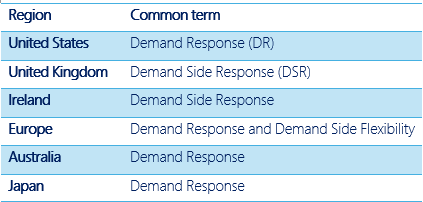
One of the most common questions businesses ask is “is Demand Response the same as Demand Side Response?” The short answer is yes, although terminology varies by region, but the terms can be used interchangeably. But the industry is increasingly adopting broader concepts such as Demand Flexibility and Energy Flexibility, reflecting the growing role of intelligent optimisation, distributed energy resources and digital energy management.
Why Demand Response matters
Electricity cannot be stored easily at grid scale without dedicated storage technologies. As a result, supply and demand must remain balanced every second of every day. Historically, this balance was achieved by adjusting electricity generation. large coal, gas, or hydro stations increased or decreased output to meet changing demand. This model worked well when electricity flowed in one direction. But today’s electricity system is far more dynamic. Millions of distributed energy resources are connected to electricity networks, including:
- solar photovoltaic (PV) systems
- wind farms
- battery energy storage (BESS)
- electric vehicles (EVs)
- heat pumps
- smart buildings
- flexible industrial equipment
- Combined Heat and Power (CHP) systems
While these technologies reduce emissions, they also introduce greater variability into electricity supply. Demand Response helps address this challenge by making electricity demand more flexible.
Instead of building additional generating capacity to meet short periods of peak demand, operators can optimise existing demand, reducing costs while supporting a more resilient and sustainable electricity system.
How Demand Response works
Although every programme differs, the basic principles are remarkably similar across global electricity markets. The process generally follows five stages.
Continuous monitoring
Participating organisations connect energy assets to an intelligent energy management platform. These assets may include: manufacturing equipment, HVAC systems, refrigeration, battery storage, CHP units, backup generators, EV charging infrastructure. The platform continuously monitors:
- electricity demand
- asset availability
- weather conditions
- market prices
- grid conditions
- customer operating requirements
Forecasting
Artificial intelligence forecasts:
- future electricity demand
- renewable generation
- market prices
- carbon intensity
- grid constraints
- customer operations
Rather than reacting to events, Demand Response platforms anticipate opportunities before they occur.
Optimisation
The platform determines:
- which assets should respond
- when they should respond
- how much flexibility is available
- which electricity market offers the greatest value
- whether participation affects customer operations
Every decision balances commercial returns with operational requirements.
Automated response
If conditions require action, participating assets automatically adjust electricity consumption. This may involve:
- reducing demand
- delaying equipment
- charging batteries
- exporting electricity
- starting onsite generation
Automation enables responses within seconds while minimising disruption.
Verification and settlement
Following participation, electricity consumption is verified and financial settlements are calculated. Businesses receive payments based on programme rules and the flexibility delivered.
Why Businesses Participate
For many organisations, Demand Response was initially viewed as a way to reduce electricity bills. But the value proposition is much broader. Businesses participate to:
- generate additional revenue
- reduce electricity costs
- improve energy resilience
- support sustainability targets
- participate in flexibility markets
- optimise battery storage
- reduce carbon emissions
- improve ESG performance
- increase return on energy assets
Rather than viewing electricity demand as a fixed cost, organisations increasingly recognise flexibility as a strategic business asset.
Grid balancing: why Demand Response exists
Electricity systems must maintain a constant balance between supply and demand. Unlike most commodities, electricity is difficult to store economically at scale using traditional infrastructure. This means that at every moment of the day, the amount of electricity being generated must match the amount being consumed. If this balance is disrupted, even for a few seconds, the system frequency begins to deviate from its standard level (50Hz in the UK and most of Europe, 60Hz in North America).
- If supply exceeds demand → frequency rises
- If demand exceeds supply → frequency falls
If deviations become too large, equipment damage, blackouts, or cascading failures can occur.
In the past system operators such as the UK’s National Energy System Operator (NESO) have managed this balance by adjusting large centralised generators up or down. But as renewable energy penetration increases, this task has become more complex. Wind and solar generation are variable and less predictable, and demand patterns are increasingly dynamic due to electrification, electric vehicles, heat pumps, and digital infrastructure such as data centres. This is where Demand Response becomes essential. Instead of only adjusting supply, operators can now adjust demand in real time; creating a faster, more flexible and often lower-cost way to stabilise the grid.
Demand Response as a grid flexibility resource
Demand Response is part of a broader category known as flexibility services. These services help system operators manage: short-term imbalances (seconds to minutes); medium-term fluctuations (hours); and long-term capacity constraints (seasonal peaks). Demand Response can provide all three.
Unlike traditional generation assets, Demand Response is not a single physical plant. It is a distributed network of flexible consumption that can be activated when required. This makes it uniquely scalable.
Markets where Demand Response operates
Demand Response is not a single programme. It operates across multiple electricity markets simultaneously, each serving a different function within the power system. Understanding these markets is essential to understanding how Demand Response generates value.
Frequency Response
Frequency response is one of the fastest and most critical grid services. It operates in real time to maintain system frequency within safe limits. When a sudden imbalance occurs, such as a generator tripping offline or a spike in demand, frequency response resources activate automatically within seconds. Demand Response assets can participate by:
- reducing consumption instantly
- switching to onsite generation
- discharging batteries
- adjusting flexible industrial load
This type of response is often automated and requires extremely fast reaction times. In many markets, frequency response is one of the highest-value flexibility services due to its importance in maintaining grid stability.
Capacity markets
Capacity markets are designed to ensure there is enough available electricity supply to meet peak demand periods, especially during extreme weather conditions. Instead of only paying for electricity generation, capacity markets pay participants for being available when needed.
Demand Response plays a major role here by:
- reducing demand during peak events
- providing backup flexibility
- complementing traditional generation assets
- helping avoid expensive infrastructure expansion
Businesses that participate in capacity markets are effectively paid for their ability to reduce demand at critical times.
Wholesale electricity markets
Wholesale markets determine the price of electricity based on supply and demand conditions. Prices fluctuate throughout the day depending on:
- weather conditions
- renewable generation output
- demand levels
- fuel prices
- system constraints
Demand Response enables organisations to respond to these price signals by shifting consumption away from high-cost periods. For example:
running energy-intensive processes during low-price periods, reducing consumption during peak price spikes or using battery storage to arbitrage price differences. This creates direct cost savings or revenue opportunities depending on market participation structure.
Balancing mechanisms and real-time markets
System operators such as NESO in Great Britain use balancing mechanisms to manage last-minute differences between forecasted and actual electricity supply and demand. These markets operate close to real time and are highly dynamic. Demand Response participants can:
- provide upward flexibility (reduce demand or increase generation)
- provide downward flexibility (increase demand when there is excess supply)
- respond to sudden grid events
- support system restoration
These services are essential for maintaining real-time system stability.
Ancillary services
Ancillary services support the safe and reliable operation of the electricity grid. They include:
- frequency regulation
- voltage control
- reserve power
- black start capability
- system inertia (in some markets)
Demand Response can contribute to several of these services depending on asset type and configuration. For example: industrial load reduction can act as fast reserve, batteries can provide frequency regulation and CHP systems can support voltage and reactive power needs.
Industrial Demand Response
Industrial energy users represent one of the most valuable sources of Demand Response capacity. This is because industrial processes often involve:
- high and predictable energy consumption
- equipment that can be temporarily paused or adjusted
- thermal inertia in processes (e.g. heat, cold storage)
- flexible production schedules in some cases
- Examples of industrial Demand Response include:
- temporarily reducing manufacturing output
- adjusting furnace or kiln operation timing
- shifting batch processing schedules
- modulating compressor loads
- using onsite generation during peak events
Industrial participation is typically structured around operational constraints, ensuring production is not disrupted. Instead, flexibility is identified within acceptable operational boundaries.
Commercial Demand Response
Commercial buildings and facilities also play a major role in Demand Response programmes. These typically include office buildings, shopping centres, hotels, hospitals, universities, warehouses and logistics centres. Common flexible systems include:
- heating, ventilation and air conditioning (HVAC)
- lighting systems
- refrigeration and cold storage
- elevator and lift systems (in limited cases)
- EV charging infrastructure
Commercial Demand Response is often less intensive than industrial participation but can still provide significant aggregated flexibility across large portfolios.
Demand Response vs Load Shifting
One of the most common misconceptions is that Demand Response is simply load shifting. While load shifting is one form of Demand Response, the two are not identical.
Load shifting: Moving energy consumption from one time to another
Demand Response: A broader system of adjusting energy consumption in response to grid or market signals
Load shifting is typically planned in advance while Demand Response is often in real-time based on grid or market events.
Demand Response vs energy flexibility
The energy industry is increasingly moving toward the term Energy Flexibility. This reflects a broader shift in thinking. Instead of viewing Demand Response as a standalone programme, it is now part of a wider ecosystem that includes:
- Demand Response
- battery optimisation
- distributed energy resources
- on-site generation
- electric vehicle integration
- smart buildings
- AI-driven energy optimisation
Energy Flexibility therefore represents the next evolution of Demand Response. It is more dynamic, more automated, and more integrated into overall energy strategy.
Turning flexibility into value
Demand Response is often misunderstood as simply an operational tool for the electricity system. In reality, it is increasingly a commercial optimisation strategy. For energy-intensive organisations, electricity is no longer just a cost to be managed. It is becoming an asset that can generate revenue when managed intelligently.
Avoided energy costs (cost reduction)
The most immediate benefit of Demand Response is reducing exposure to high electricity prices. Demand Response enables organisations to reduce consumption during the most expensive periods of the day. Typical strategies include:
- shifting industrial production away from peak pricing windows
- reducing HVAC load during system peaks
- pre-cooling or pre-heating facilities
- using onsite generation during high-price periods
- charging batteries during low-price periods
Even without participating in formal markets, this alone can deliver meaningful savings.
Market revenues (direct payments)
An often more significant revenue stream comes from participation in electricity flexibility markets. These markets pay businesses for being available to adjust electricity consumption or generation when required by the grid. Payments are typically based on:
- availability (being ready to respond)
- actual performance (delivering flexibility when called)
- speed of response
- duration of response
- reliability across events
This is where Demand Response becomes a revenue-generating activity as businesses are compensated not just for reducing energy use but for providing system value. In many cases, this becomes a recurring revenue stream independent of operational savings.
Optimisation of energy assets (value creation)
The third revenue stream comes from optimising the performance of distributed energy assets. This includes:
- battery energy storage systems (BESS)
- combined Heat and Power (CHP)
- on-site generators
- electric vehicle charging infrastructure
- flexible industrial processes
These assets can generate value in multiple ways, for example:
Batteries
- charging when prices are low
- discharging when prices are high
- providing frequency response services
- avoiding peak demand charges
CHP and onsite generation
- running during high price periods
- providing backup resilience
- participating in capacity markets
- Flexible industrial load
- shifting production schedules
- reducing non-critical processes
- participating in demand reduction events
When optimised correctly, these assets move from being cost centres to revenue-generating infrastructure.
Revenue stacking: the key to maximum value
One of the most important concepts in Demand Response is revenue stacking. This refers to the ability to combine multiple revenue streams from a single asset. For example, a battery system might simultaneously participate in:
- frequency response markets
- wholesale energy arbitrage
- capacity markets
- peak shaving programmes
- local flexibility services
However, these opportunities often compete with one another. A battery cannot always respond to every market at once. This is where optimisation becomes critical.
A Demand Response platform continuously evaluates:
- which market is most valuable at a given moment
- what future opportunities may arise
- the operational constraints of the asset
- the impact on degradation and lifecycle cost
- contractual obligations across markets
The goal is to maximise total lifetime value, not just short-term revenue.
Why GridBeyond’s approach to Demand Response is different
The Demand Response market has moved from relatively simple, rule-based programmes focused on peak load reduction into a far more complex ecosystem of interconnected electricity markets, distributed energy resources, and real-time optimisation services. As this evolution has taken place, many providers have continued to operate within frameworks that were designed for an earlier stage of the energy transition, where flexibility was largely treated as an occasional intervention rather than a continuously optimised resource.
In this context, the distinction between different Demand Response providers is no longer simply about who can aggregate the most load or respond to the most grid events. The real differentiator is the ability to manage flexibility as a dynamic, multi-layered asset that operates across several markets simultaneously, while continuously adapting to changing system conditions.
GridBeyond’s Demand Response solutions are designed to be an integrated optimisation layer that sits across the entire energy system of a customer’s assets. This means that flexibility is not allocated in advance to one specific market or use case, but is instead continuously evaluated and reallocated based on real-time conditions, market signals, and operational constraints.
Opportunities emerge and disappear within short timeframes, and the ability to respond dynamically becomes a critical source of competitive advantage. GridBeyond’s multi-market optimisation model is designed specifically to address this challenge. Instead of separating participation into distinct silos such as capacity markets, frequency response, or wholesale optimisation, the platform continuously evaluates all available opportunities simultaneously. Each connected asset is assessed not only in terms of its technical capability, but also its current operational state, contractual obligations, and the evolving market environment. The result is a system that can reassign flexibility in real time, ensuring that the highest-value opportunity is always prioritised at any given moment.
By incorporating forecasting, machine learning, and real-time data analysis, GridBeyond’s platform forecasts shifts in market conditions, grid stress events, and renewable generation variability before they fully materialise. This enables assets to be positioned in advance, rather than simply reacting once an opportunity has already been declared. In practice, this distinction between reactive and predictive optimisation can have a significant impact on overall value capture, particularly in highly volatile electricity markets.
GridBeyond’s approach integrates real-time operational data, enabling the platform to identify flexibility within tightly defined constraints. Rather than relying on generic load reduction signals, decisions are made in the context of actual production schedules, equipment limitations, and site-specific operational requirements. This allows industrial participants to engage in Demand Response markets in a way that is both commercially valuable and operationally safe, unlocking capacity that would otherwise remain inaccessible. The same principle applies when coordinating across different asset classes within a single portfolio. By treating assets as part of a unified flexibility portfolio, GridBeyond’s system can dynamically determine the most efficient combination of responses at any given moment. These decisions are not pre-programmed but are continuously recalculated based on real-time system conditions and forward-looking market expectations.
Underpinning all of this is a closed-loop operational model in which data, forecasting, optimisation, and dispatch are continuously interconnected. Rather than following a linear sequence of planning and execution, the system operates as an ongoing cycle of observation, decision-making, action, and feedback. Each response informs future optimisation, allowing the system to improve over time as more operational data becomes available. This creates a compounding intelligence effect, where both forecasting accuracy and dispatch efficiency improve progressively.
Latest energy insights
-

24 July 2026
11 minute read
Virtual Power Plant vs DERMS vs aggregation: what’s the difference?
Read More -

14 July 2026
2 minute read
Government urged to cut business energy bills by moving green levies
Read More -

8 July 2026
3 minute read
Electricity system “structurally failing manufacturers”, says Make UK
Read More -

2 July 2026
8 minute read
Bring your own power: why the Energy Management System (EMS) is crucial
Read More