News
better business decisions
Posted 3 weeks ago | 11 minute read
The ultimate guide to Virtual Power Plants
Learn how Virtual Power Plants work, their benefits, AI optimisation, battery storage, demand response and how VPPs are transforming energy systems worldwide.
The global electricity system is undergoing its biggest transformation since the creation of the centralised power grid more than a century ago. Renewables generation, battery energy storage systems, electric vehicles (EVs), flexible industrial loads and distributed energy resources (DERs) are replacing predictable, one-way electricity flows with a dynamic, decentralised ecosystem. While this transition is essential to achieving net zero, it also introduces new challenges. Renewable energy sources are inherently variable, electricity demand is becoming less predictable, and grid operators must maintain system stability while integrating millions of distributed energy assets.
Rather than constructing new power stations, Virtual Power Plants (VPPs) intelligently connect thousands of distributed energy resources into a single, coordinated network that can respond to electricity market signals in real time. Through advanced software, artificial intelligence (AI), cloud computing and predictive analytics, these assets operate together as if they were a single power plant.
For businesses, Virtual Power Plants unlock new revenue opportunities, reduce energy costs and improve resilience. For utilities and system operators, they provide the flexibility needed to balance increasingly renewable electricity systems. For society, they enable greater renewable integration while reducing reliance on carbon-intensive peaking generation.
As energy markets evolve, Virtual Power Plants are rapidly becoming a cornerstone of the future electricity system. This guide explains everything you need to know about Virtual Power Plants, including:
- what a Virtual Power Plant is
- how Virtual Power Plants work
- the technologies behind VPPs
- the role of artificial intelligence and automation
- demand response and distributed energy resources
- battery optimisation and energy trading
- benefits for businesses, utilities and grid operators
Whether you are an energy manager, utility executive, sustainability leader, investor or policymaker, this guide provides a comprehensive overview of one of the fastest-growing areas of the global energy transition.
What is a Virtual Power Plant?
As one user put it on Reddit:
“a virtual power plant is a system of distributed energy resources—like rooftop solar panels, electric vehicle chargers, and smart water heaters—that work together to balance energy supply and demand on a large scale.”
A better description would be that a VPP is:
“a software-enabled network that aggregates distributed energy resources to optimise electricity generation, consumption and storage while providing flexibility services to electricity markets and system operators”.
It is essentially a digitally connected network of assets that are monitored, controlled and optimised through advanced software to operate as a single flexible energy resource. Unlike a traditional power station, a Virtual Power Plant does not rely on one physical location or one generating asset. It aggregates thousands of decentralised energy assets, including:
- battery Energy Storage Systems (BESS)
- commercial and industrial electricity demand
- solar photovoltaic (PV) installations
- wind generation
- Combined Heat and Power (CHP) systems
- backup generators
- electric vehicle charging infrastructure
- flexible manufacturing processes
- refrigeration and cold storage
- data centre loads
- building management systems
- microgrids
These assets are connected through secure communications infrastructure to a central optimisation platform. Using real-time data, forecasting and automated controls, the platform determines how each asset should respond to changing electricity prices, grid conditions and customer requirements. Rather than simply consuming electricity, participants in a Virtual Power Plant become active contributors to the energy system.
This ability to co-ordinate thousands of smaller assets allows a VPP to deliver many of the same services as a conventional power station, including:
- capacity market provision
- frequency regulation
- demand response
- reserve services
- energy trading
- peak load management
- grid balancing
- renewable integration
The difference is that these services are delivered without building new fossil fuel generation, instead making better use of existing energy assets.
Why Virtual Power Plants matter
Historically, electricity grids were relatively simple. Power flowed in one direction; generated by large power stations moved through the grid networks and used by consumers. But today, the system is dramatically different. Millions of distributed energy resources are now connected to electricity networks across the world.
Examples include:
- rooftop solar
- commercial batteries
- industrial manufacturing equipment
- flexible heating and cooling systems
- electric vehicle chargers
- smart buildings
- behind-the-meter storage
- community energy schemes
While these technologies reduce emissions, they also increase operational complexity. Grid operators must constantly balance supply and demand to maintain frequency and voltage within safe operating limits. Even small imbalances can affect system stability. Virtual Power Plants provide the intelligence required to co-ordinate these distributed resources, allowing them to respond collectively to market and network conditions.
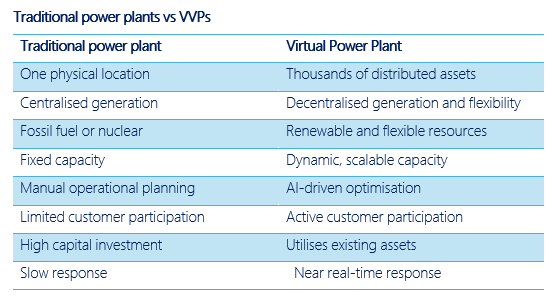
Virtual Power Plants are therefore not a replacement for electricity generation—they are a smarter way of coordinating existing resources to improve system efficiency and flexibility.
The evolution of Virtual Power Plants
The concept of aggregating distributed energy resources first emerged in the late 1990s, but early implementations were limited by technology. Over the past decade, several advances have transformed VPPs into commercially viable platforms:
- the widespread deployment of smart meters and connected devices
- falling costs for battery energy storage systems
- growth in rooftop solar and distributed generation
- advances in cloud computing and edge computing
- sophisticated AI and machine learning models
- increasing volatility in wholesale electricity markets
- regulatory reforms enabling demand-side participation
As a result, Virtual Power Plants have evolved from niche pilot projects into critical infrastructure supporting power systems across Europe, North America, Australia, and Asia-Pacific.
The building blocks of a Virtual Power Plant
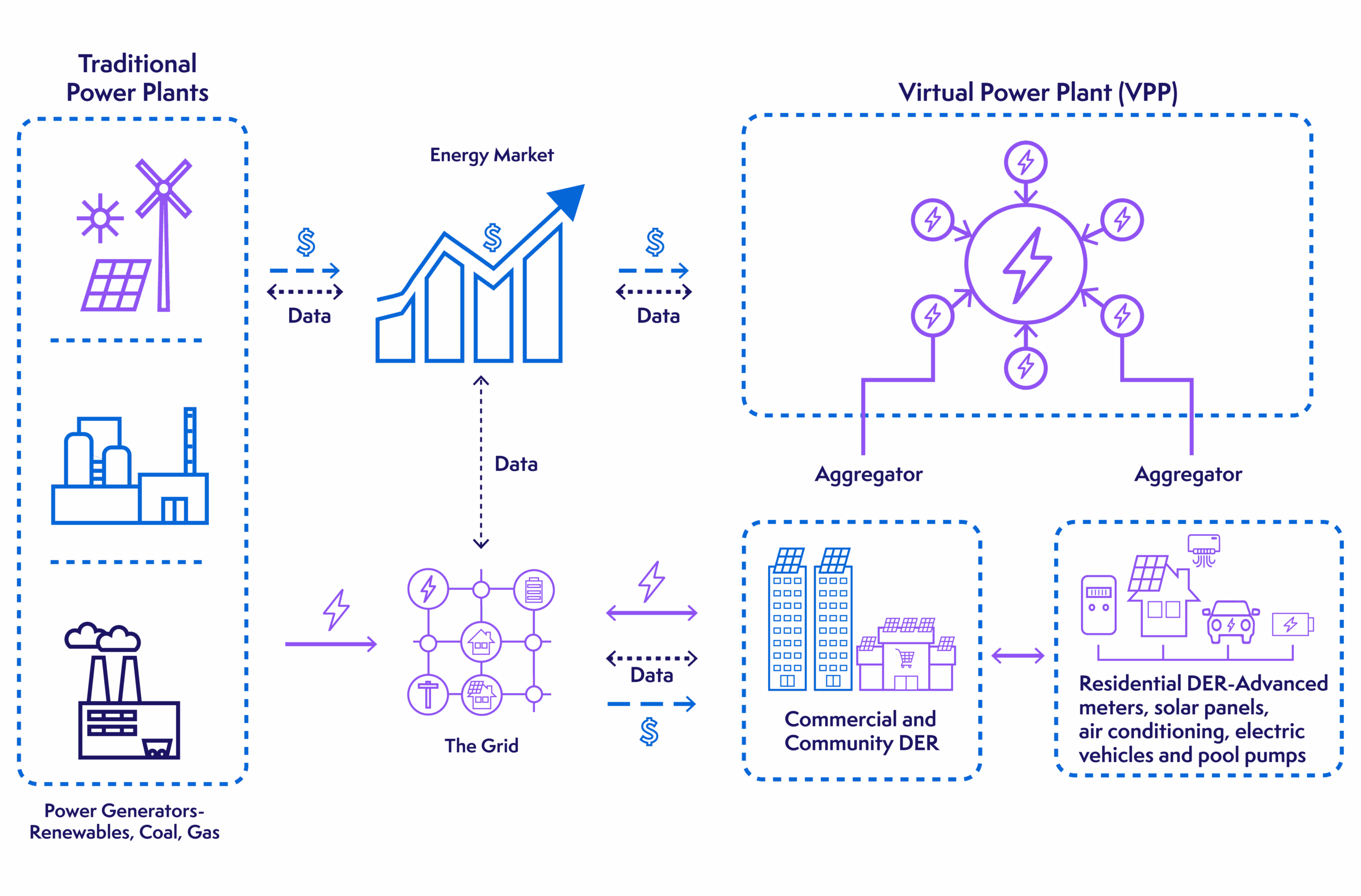
Every successful Virtual Power Plant combines several key components:
Distributed Energy Resources (DERs)
These are the physical assets connected to the platform. The more diverse the asset portfolio, the greater the flexibility available.
Intelligent software platform
The software acts as the brain of the Virtual Power Plant. It continuously analyses:
- electricity prices
- weather forecasts
- renewable generation forecasts
- asset availability
- customer preferences
- grid constraints
- carbon intensity
- market opportunities
It then determines the optimal action for every connected asset.
Artificial Intelligence (AI)
Modern VPPs increasingly rely on AI and machine learning to improve forecasting accuracy, optimise dispatch decisions and automate participation across multiple electricity markets. Rather than reacting to events after they occur, AI predicts future market conditions and prepares assets in advance.
Secure communications
Reliable, low-latency communication is essential. Every connected asset continuously exchanges operational data with the optimisation platform. This enables near real-time monitoring and automated control while maintaining cybersecurity and operational resilience.
How does a Virtual Power Plant work?
Unlike a conventional power station, which generates electricity from one physical location, a VPP orchestrates a network of geographically dispersed assets. Each asset remains under the ownership and control of its operator but is connected securely to the VPP platform through communications technology. The platform continuously monitors asset availability, forecasts energy demand and generation, and identifies opportunities to optimise performance based on electricity market conditions. This process takes place every few seconds or minutes, allowing the VPP to respond rapidly to changes in electricity prices, grid frequency, renewable generation and customer requirements.
The result is a highly flexible, software-defined energy network that can deliver many of the same services as a traditional power station, but without constructing new generating capacity.
The five core stages of a Virtual Power Plant
Although every VPP platform differs slightly, most follow five key operational stages.
Connecting assets
The first stage is integrating distributed energy resources into the platform. Each asset is connected using secure industrial communications protocols or IoT gateways. Once connected, the VPP receives real-time operational data such as:
- power output
- electricity consumption
- state of charge (for batteries)
- equipment availability
- operational constraints
- maintenance status
- weather conditions
- building occupancy
- production schedules
The richer the data available, the more accurately the platform can optimise asset performance.
Continuous monitoring
Once connected, every asset is monitored continuously. A VPP platform typically collects thousands of data points every day. These may include:
Market data
- wholesale electricity prices
- ancillary service prices
- capacity market signals
- balancing market opportunities
Grid data
- frequency
- voltage
- network congestion
- grid constraints
Customer data
- operational priorities
- manufacturing schedules
- energy consumption
- site availability
Environmental data
- weather forecasts
- solar irradiance
- wind speed
- temperature
- carbon intensity
Together, these datasets create a live digital representation of both the electricity system and each participating asset.
Forecasting future conditions
One of the defining characteristics of advanced Virtual Power Plants is that predict future conditions. Using artificial intelligence, machine learning and predictive analytics, the platform forecasts:
- electricity demand
- renewable generation
- wholesale market prices
- carbon intensity
- customer energy consumption
- battery charging opportunities
- grid congestion
- frequency events
For example, if weather models predict a surge in solar generation during the afternoon, wholesale electricity prices may fall significantly.
The platform can therefore:
- charge batteries during low-price periods
- shift industrial demand
- delay non-essential processes
- prepare assets for later market opportunities
Rather than responding after prices change, the VPP positions assets in advance.
Optimising assets
This is where the intelligence of the Virtual Power Plant becomes most apparent. Every connected asset has different operational characteristics. The VPP analyses every available asset simultaneously.
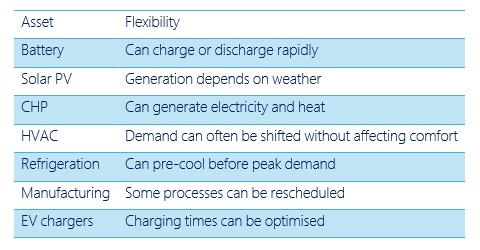
It asks questions such as:
- which asset should respond?
- when should it respond?
- for how long?
- what market provides the highest value?
- will participation affect customer operations?
- will battery degradation outweigh potential revenue?
- is another opportunity likely to occur later today?
These decisions are made continuously using optimisation algorithms. Instead of relying on human operators to manage hundreds of sites individually, the platform automatically selects the most effective combination of resources.
Dispatch and Control
Once the optimal strategy has been determined, the platform sends automated instructions to participating assets. Many responses occur within seconds. Automation enables this speed while reducing operational complexity for participating businesses.
Examples include:
- charging a battery
- discharging stored electricity
- reducing industrial demand
- increasing CHP generation
- delaying refrigeration cycles
- adjusting HVAC loads
- exporting electricity to the grid
- participating in frequency response
The role of Artificial Intelligence
Artificial intelligence has become one of the most significant differentiators between modern Virtual Power Plants and earlier demand response programmes. Traditional systems relied on predefined operating rules. For example: “If electricity prices exceed £250/MWh, reduce demand.” Today’s platforms are significantly more sophisticated. AI continuously learns from historical behaviour, identifies recurring patterns and adapts strategies based on changing market conditions.
Machine learning models may forecast:
- site-level electricity demand
- renewable generation output
- battery performance
- market prices
- equipment availability
- frequency response events
- customer operating patterns
As more data becomes available, forecasts become increasingly accurate. This enables better commercial decisions while reducing operational risk.
Multi-market optimisation
One of the greatest advantages of a sophisticated VPP platform is its ability to optimise participation across multiple electricity markets simultaneously. Rather than committing an asset to a single revenue stream, advanced optimisation platforms assess all available opportunities in real time.
These may include:
- wholesale energy markets: buying electricity when prices are low and selling when prices increase
- capacity markets: providing guaranteed electricity capacity during periods of high demand.
- frequency response markets: responding rapidly to maintain grid frequency within operational limits
- balancing mechanisms: helping system operators maintain real-time balance between supply and demand
- local flexibility markets: supporting regional electricity networks experiencing congestion or infrastructure constraints
- renewable curtailment avoidance: using battery storage or flexible demand to absorb excess renewable generation that might otherwise be curtailed
Rather than treating these as separate activities, the VPP evaluates every opportunity together to maximise total value.
How businesses participate
One common misconception is that joining a Virtual Power Plant means losing operational control. But the opposite is true. Commercial and industrial participants define operational boundaries before joining the programme.
For example:
- A manufacturer may specify:
- production must never stop
- certain machinery cannot be interrupted
- maximum flexibility is limited to x MW
- demand reduction cannot exceed x minutes
The VPP platform respects these constraints automatically. This ensures participation never compromises business operations while still unlocking new revenue opportunities.
GridBeyond perspective
As businesses seek greater control over their energy use and new opportunities to participate in flexibility markets, platforms that combine real-time optimisation, AI-driven forecasting, and multi-market participation are becoming increasingly valuable.
GridBeyond’s experience in integrating industrial and commercial energy assets, battery storage, onsite generation, and demand-side flexibility demonstrates how Virtual Power Plants can deliver measurable operational and financial value while supporting a more resilient, lower-carbon electricity system.
Latest energy insights
-
24 July 2026
11 minute read
Virtual Power Plant vs DERMS vs aggregation: what’s the difference?
Read More -
14 July 2026
2 minute read
Government urged to cut business energy bills by moving green levies
Read More -
8 July 2026
3 minute read
Electricity system “structurally failing manufacturers”, says Make UK
Read More -
2 July 2026
8 minute read
Bring your own power: why the Energy Management System (EMS) is crucial
Read More