News
better business decisions
Posted 4 months ago | 3 minute read
US to have adequate resources to meet normal summer peak demand, says NERC
Across the US, the 2026 Summer risk profile is marked by rising demand, significant generation growth in many areas, the prospect of challenging hydrological conditions, and the unpredictability of large loads, from both a forecasting and operational perspective. But only three regions and one locality are at-risk of supply shortages this summer.
Published on May 19, the 2026 Summer Reliability Assessment, which covers the June–September period, notes that record resource additions have strengthened readiness for the summer season, even as elevated risks remain in some areas.
All areas are projected to have adequate resources for normal summer conditions, due in part to system resource additions, including solar and battery and some new natural gas-fired generators over the past year.
A few areas face elevated risk of supply shortfalls or have locally constrained zones during more extreme summer conditions:
- The Texas Interconnection was deemed at a normal risk level for Summer 2026 due to a 12% jump in anticipated resources for the summer period and a 4.5% decline in projected demand (resulting from updated load modeling and more demand response from large computational loads). But the Far West zone remains at risk for load disruption when solar and wind output is low and transmission constraints limit the flow of imports into the local area.
- In NPCC-New England, firm import commitments have declined since last year resulting in lower operating reserves and increased reliance on non-firm supplies from neighboring systems to meet high demand.
- In WECC-Northwest, persistent drought conditions, rising demand, and a drop in existing resources could increase vulnerability during more extreme summer conditions.
- In the SaskPower area, a higher demand forecast has reduced operating reserves, potentially causing operators to seek non-firm power transfers from neighbors or take other operating mitigations to manage high demand or unanticipated generator outages.
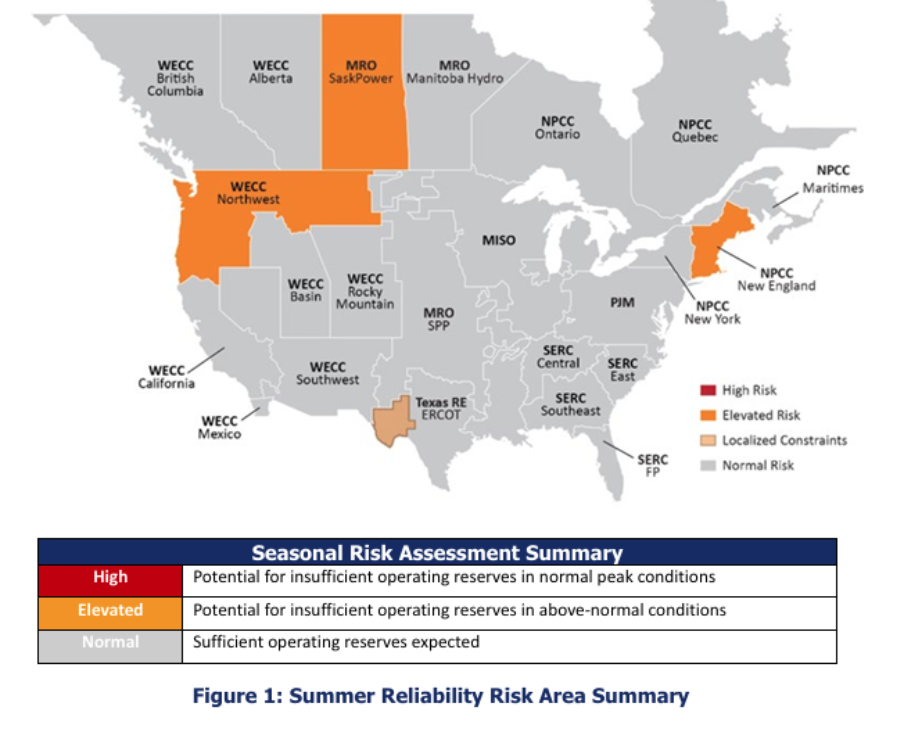
Source: NERC
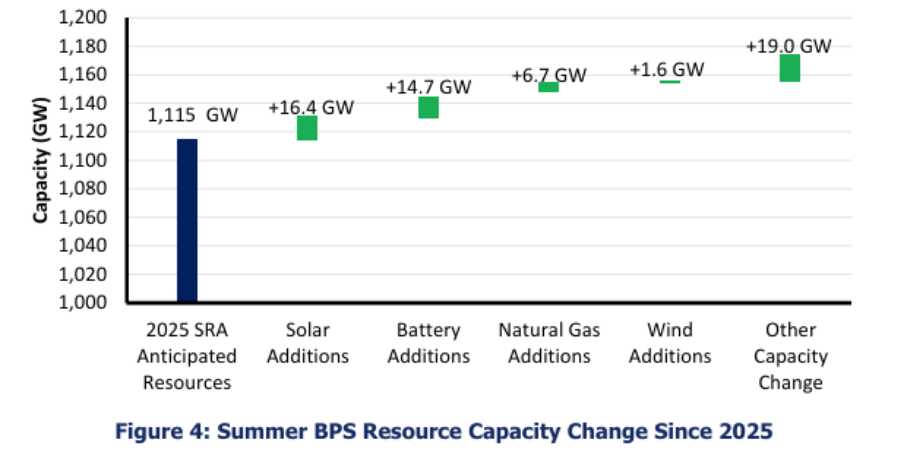
Across all assessment areas Summer resource capacity has risen by over 58GW. Solar PV is the leading type of new resource (+30.5GW nameplate additions, contributing an additional 16.4GW of capacity at peak demand). Since last summer, over 16GW of nameplate battery storage capacity has been added to the grid. Texas and the Western Interconnection continue to have the strongest growth in these resources. But it notes that accelerated demand, rapid growth of large loads, periods of low wind output, and the overlap of early summer heat with maintenance outages may challenge reliability.
Source: NERC
Load growth from data centers and large loads continues to grow, with aggregated peak demand across all assessment areas increasing by over 11GW since 2025. The largest increases are in parts of the US West. WECC-Southwest saw the largest year-on-year increase in net internal demand at +9.5%, followed by WECC-Northwest with +4.6% and WECC-Basin with 3.8%.
Latest energy insights
-
15 October 2026
6 minute read
Following the forecast: the hidden risk in battery optimization | Q&A
Read More -
7 October 2026
4 minute read
Private wires in Ireland: a new route to power for data centres and industry?
Read More -
7 October 2026
7 minute read
What is a distributed energy network, and why are businesses building their operations around one?
Read More -
25 September 2026
3 minute read
The age of electricity: the growing role of electricity in economies and energy systems
Read More -
 Awards
News
Awards
News
17 September 2026
2 minute read
GridBeyond named a Business Energy Achievement Awards winner for innovation in data centre energy flexibility
Read More -

17 September 2026
2 minute read
MPs call for removal of “net zero” from government terminology
Read More