News
better business decisions
Posted 16 hours ago | 6 minute read

Choosing a demand response or battery optimisation partner: 10 questions to ask before you sign
The partner you pick to run your flexibility or battery will shape your returns. In this article we spoke to GridBeyond’s head of demand response UK, Shawn Duckett to find out the key questions that businesses can ask to determine what separates a good optimiser from a costly mistake.
Why does the choice of partner matter so much?
The asset is only half the story. Two identical batteries, or two plants with the same flexible load, can earn very different amounts depending on who trades and dispatches them.
In addition, markets have got harder to forecast and ancillary services that once paid well are filling up, price spreads are shifting, and revenue now depends on trading skill rather than just showing up. A partner who was fine five years ago may not be fine now.
And you’re usually signing a multi-year contract. Switching mid-term is possible, but it’s disruptive and often expensive. So, it pays to ask hard questions up front and get the right optimiser for your business from day one.
Whether you’re an energy manager weighing demand response or an investor choosing a battery optimiser, these ten questions will tell you most of what you need to know.
Q: How exactly do you get paid, and how will I see what I’ve earned?
Start here, because commercial models vary more than most buyers expect. Some partners take a fixed fee. Others take a revenue share, a floor-plus-share, or a mix. None of these is wrong. What matters is that you understand it and can check it. Ask for a sample settlement statement. You should be able to trace each pound or dollar back to a market, a time period and a dispatch event.
Q: What have you actually delivered for sites or assets like mine?
Forecasts are easy to produce. Track records aren’t. Ask for results from customers in your sector, your market and at a similar scale.
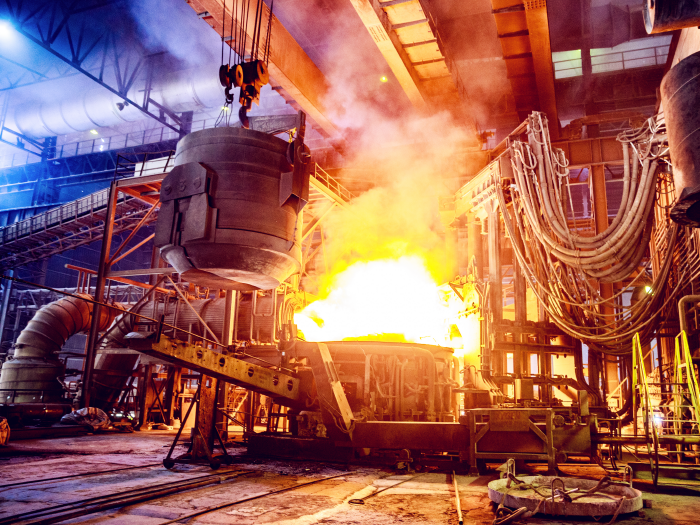
A cold store in the UK and a steel plant in PJM have very little in common. Neither does a 2MW behind-the-meter battery and a 200MW grid-scale one. You want evidence the partner has done your kind of job before.
3. Which markets can you take me into, now and next year?
Revenue stacking is where the money is. Your partner should be able to move your asset between wholesale trading, balancing, ancillary services and capacity markets as prices change. If your partner can’t access a particular service, you simply won’t earn from it. Ask which markets they’re live in today, which they’re qualifying for, and how fast they’ve added new ones in the past.
Q: Who stays in control of my site when you dispatch?
For energy users, this is usually the deal-breaker. Production comes first. If the operations team thinks flexibility puts output at risk, the project won’t happen. Ask how dispatch works in practice. How much notice do you get? Can you opt out of an event, and what does that cost? Can the partner set hard limits for each asset, such as minimum temperatures in a cold store or minimum run times on a furnace?
Q: How will you protect my battery’s health and warranty?
This one matters most to battery owners. Aggressive cycling can boost short-term revenue while quietly eating into the asset’s life and breaching warranty terms. A good optimiser treats degradation as a real cost in every trading decision. It should only cycle the battery when the revenue is worth the wear.
6. How good are your forecasts, and can you prove it?
Forecasting drives everything: price forecasts, load forecasts, availability forecasts. Small errors compound over thousands of trading intervals into real money. Ask how the partner measures forecast accuracy and how it has improved over time. Ask how the models cope with unusual events, such as extreme weather or a sudden price spike. AI and machine learning are now standard claims, so look for evidence rather than labels.
Q: What does the contract lock me into?
Read the small print before the pitch deck. Look at contract length, exit terms, exclusivity and who owns the data. Also check how risk is shared. Who pays if a dispatch is missed? Who carries the cost of non-delivery penalties? Are revenue guarantees or floors on offer, and what do you give up in exchange?
8. What will I see day to day, and what will my team have to do?
A partner’s platform is how you’ll experience the relationship. If you can’t see what your assets are doing, you can’t trust the results. Ask for a demo of the live dashboard, not slides. Check what it shows: real-time dispatch, earnings, forecasts, asset status. Then ask what’s needed from your side to get started, from metering and control hardware to IT security sign-off and staff time.
Q: Who do I call when something goes wrong?
Markets run around the clock, and so do most industrial sites. Something will go wrong at 3am on a Sunday eventually. Ask whether the partner runs a 24/7 control room, staffed by people rather than an inbox. Ask who your named contact will be, and how quickly faults get escalated and fixed.
Q: Will you still be the right partner in five years?
Your needs will change. You might add a battery, electrify a process, open new sites or expand into another country. Market rules will change too. Ask how the partner has adapted to past market changes, how it invests in its platform and whether it can manage several asset types across several sites in one place. Financial stability matters as well, so ask about backing and growth.
So, what should I do next?
Take these ten questions into every conversation and ask each shortlisted partner the same ones. The differences show up quickly once you compare answers side by side. The best partners won’t mind the scrutiny. They’ll welcome it, because clear answers are how they win.
GridBeyond has been optimising flexible load and battery storage for industrial sites and asset owners since 2010, across Great Britain, Ireland, the United States, Japan and Australia. If you’d like to put these questions to us, book a call with our team.
Latest energy insights
-
20 October 2026
6 minute read
Choosing a demand response or battery optimisation partner: 10 questions to ask before you sign
Read More -
15 October 2026
6 minute read
Following the forecast: the hidden risk in battery optimization | Q&A
Read More -
7 October 2026
4 minute read
Private wires in Ireland: a new route to power for data centres and industry?
Read More -

7 October 2026
7 minute read
What is a distributed energy network, and why are businesses building their operations around one?
Read More -
25 September 2026
3 minute read
The age of electricity: the growing role of electricity in economies and energy systems
Read More -
 Awards
News
17 September 2026
2 minute read
GridBeyond named a Business Energy Achievement Awards winner for innovation in data centre energy flexibility
Read More